
Introduction
Did you know that the global AI in education market is projected to reach nearly $20 billion by 2027? For language teachers, this isn’t just a trend—it’s a revolution. The days of one-size-fits-all lesson plans and mountains of grading are quickly being replaced by intelligent, adaptive, and highly efficient digital solutions.
If you’re looking to elevate your classroom, using AI tools for language teaching is no longer optional. AI tools for language teaching can help create a dynamic learning environment, making lessons more engaging and personalized. With AI tools for language teaching, teachers can streamline planning, provide instant feedback, and better support individual students. This guide highlights AI tools for language teaching, strategies, and expert tips to transform your teaching and empower your students for success in 2025 and beyond.
What Are AI Tools for Language Teaching?
In simple terms, AI tools for language teaching are software applications that use artificial intelligence to enhance how students learn a new language. These AI tools for language teaching go beyond static worksheets, leveraging Natural Language Processing, machine learning, and speech recognition to create interactive experiences. With AI tools for language teaching, the software can understand student input, identify errors, and adapt to individual learning paces. Additionally, AI tools for language teaching can even generate new content, providing personalized practice and guidance tailored to each learner.
The relevance of these tools has skyrocketed in recent years. As classrooms become more diverse, teachers need solutions that can cater to dozens of unique learning styles simultaneously. AI provides that scalability. According to a report from Google, educators see AI’s greatest potential in personalizing learning and providing students with more one-on-one support—something that is incredibly valuable in language acquisition.
Why AI Matters in Language Education
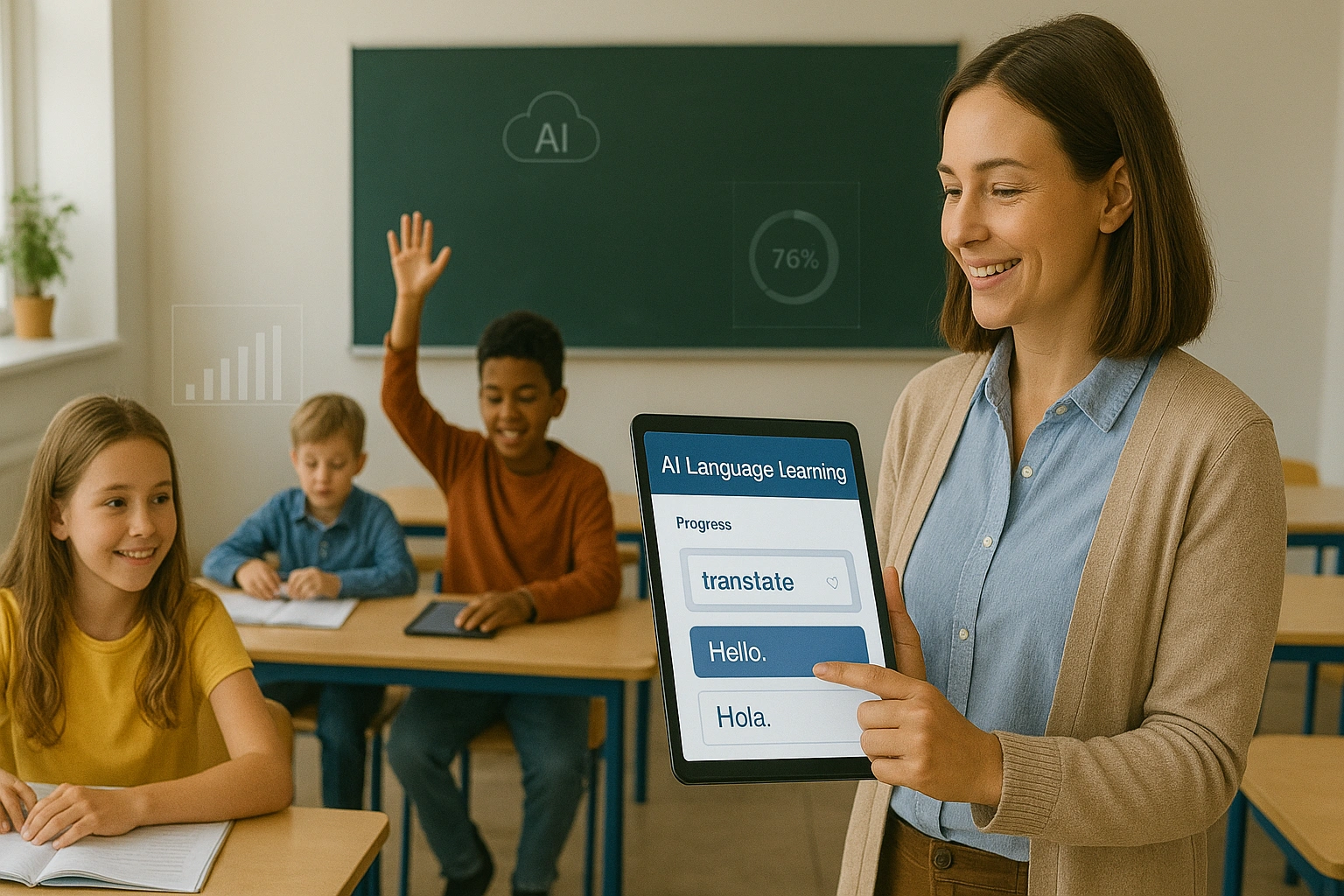
Integrating AI tools for language teaching into your methodology isn’t just about using the latest technology. AI tools for language teaching help drive real results and tackle long-standing challenges in language education. By using AI tools for language teaching, teachers can reduce workload while enhancing student confidence. Ultimately, AI tools for language teaching offer practical ways to make learning more personalized, engaging, and effective.
Create Truly Personalized Learning Paths
Every student learns differently. AI tools can analyze a student’s performance in real-time, identifying their specific strengths and weaknesses. Based on this data, the software can generate customized quizzes, recommend specific vocabulary to practice, or suggest grammar exercises tailored to their needs. This ensures that advanced students remain challenged while struggling students get the support they need without feeling left behind.
Automate Tedious Grading and Feedback
Grading essays, correcting pronunciation, and checking grammar worksheets can consume countless hours. AI can handle these tasks with remarkable accuracy and speed.
- Instant Feedback: Students receive immediate corrections on their writing or speaking, allowing them to learn from mistakes on the spot.
- Objective Scoring: AI removes unintentional bias from grading, ensuring every student is evaluated on the same criteria.
- Time Savings: Teachers reclaim valuable time to focus on more impactful activities like lesson planning, student interaction, and creative project design.
Enhance Student Engagement and Motivation
Traditional language drills can be monotonous. AI introduces elements of gamification, interactive storytelling, and real-world conversation practice that make learning fun.
- Conversational Chatbots: Students can practice their speaking skills with an AI tutor that’s available 24/7, removing the fear of making mistakes in front of peers.
- Gamified Quizzes: Leaderboards, points, and badges turn vocabulary and grammar practice into a friendly competition.
- Immersive Content: AI can generate stories, dialogues, or even role-playing scenarios based on a student’s interests. For more insights on leveraging technology, explore our guide on digital finance trends.
How AI Tools Work: Core Features
The magic behind AI tools for language teaching lies in a few core technologies that work together to simulate an intelligent learning partner. Understanding these features helps you choose the right tool for your classroom’s needs.
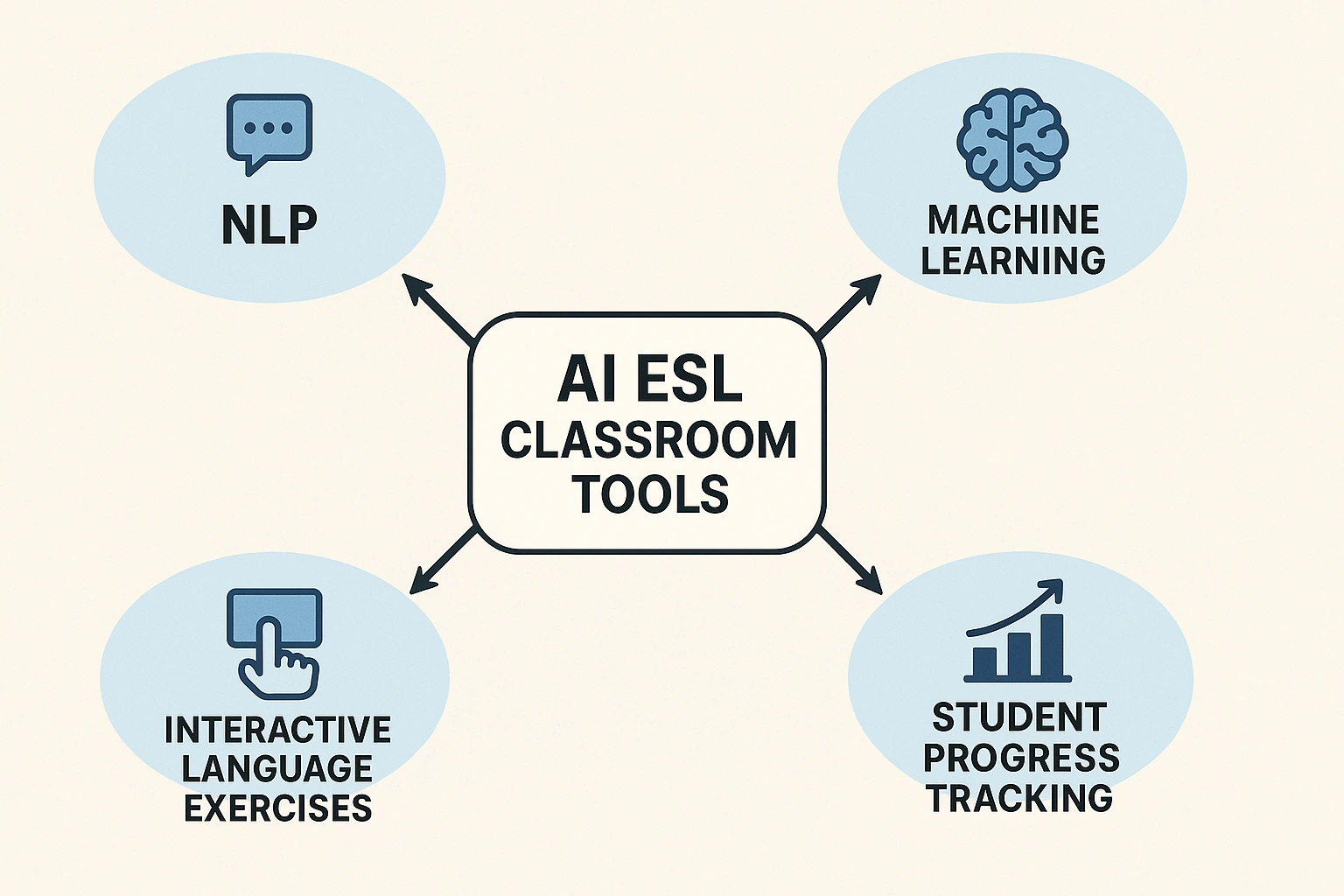
- Natural Language Processing (NLP): This is the technology that allows computers to understand, interpret, and generate human language. In the classroom, NLP is used to analyze student writing, identify grammatical errors, and even assess the sentiment or tone of a text.
- Speech Recognition: This feature converts spoken words into text. It’s the backbone of any AI tool designed for pronunciation practice. Advanced systems can pinpoint specific phoneme errors and provide visual feedback on how to improve tongue and mouth placement.
- Machine Learning (ML): ML algorithms allow the software to learn and improve over time without being explicitly programmed. The more students interact with the tool, the better it becomes at recognizing error patterns, predicting student needs, and personalizing content.
- Generative AI: This is the technology behind tools that create new content. For language teachers, it can be a game-changer for generating unique writing prompts, creating sample dialogues, or even building entire lesson plans from scratch based on a few keywords.
Here’s a simplified flow of how these features work together in a typical AI-powered writing assistant:
| Step | Action | Technology Used | Outcome |
|---|---|---|---|
| 1 | Student writes a sentence. | User Input | “I has two cats.” |
| 2 | The tool analyzes the text. | Natural Language Processing (NLP) | Identifies subject-verb agreement error. |
| 3 | The tool suggests a correction. | Generative AI | Suggests changing “has” to “have.” |
| 4 | The tool logs the error. | Machine Learning (ML) | The system notes the student struggles with this rule and may suggest more practice exercises on it later. |
Real-Life Use Case: A Review of QuillBot
To see these features in action, I integrated QuillBot, a popular AI writing platform, into my intermediate ESL classroom for a month. While not exclusively a language teaching tool, its features are incredibly powerful for this context. My goal was to help students improve their sentence structure and expand their vocabulary in academic writing.
The experience was overwhelmingly positive. We primarily used the “Paraphraser” and “Grammar Checker” functions. Students would write a short paragraph, run it through the Grammar Checker for instant feedback on errors, and then use the Paraphraser to explore different ways to express the same idea, which was fantastic for vocabulary building.
Here’s a breakdown of my experience:
| Pros | Cons |
|---|---|
| ✅ Highly Intuitive: Students learned to use it within minutes. | ❌ Over-Reliance Risk: Some students were tempted to accept all suggestions without understanding the grammar rules. |
| ✅ Promotes Independence: Students could self-correct their work before submitting it. | ❌ Context Nuances: The AI occasionally missed cultural or contextual nuances in writing. |
| ✅ Excellent Vocabulary Builder: The synonym slider is a powerful feature for exploring new words. | ❌ Premium Features Needed: The most powerful features, like the plagiarism checker, are behind a paywall. |
| ✅ Multiple Modes: Modes like “Formal,” “Simple,” and “Creative” helped students understand tone. |
Top AI Tools for Language Teachers Compared
Choosing the right tool depends on your specific goals. Are you focused on speaking, writing, or comprehensive lesson delivery? Here is a comparison of some of the best AI tools for language teaching available in 2025.
| Tool | Key Features | Pros | Cons | Best For |
|---|---|---|---|---|
| Duolingo for Schools | Gamified curriculum, automated progress tracking, personalized practice. | Highly engaging for students, free to use, covers 40+ languages. | Less focus on conversational practice, can feel repetitive. | Beginner to intermediate students, vocabulary & grammar drills. |
| QuillBot | Paraphraser, grammar checker, summarizer, citation generator. | Excellent for academic writing, builds vocabulary, integrates with Word/Chrome. | Core features are free, but advanced modes require a subscription. | Intermediate to advanced ESL students focusing on writing skills. |
| ELSA Speak | AI-powered pronunciation coach, real-time feedback on phonemes, fluency analysis. | Industry-leading speech recognition, highly detailed feedback. | Primarily focused on speaking, subscription-based. | Improving pronunciation and accent reduction for all levels. |
| ChatGPT / Gemini | Generative AI chatbot, lesson plan creation, prompt generation, role-playing. | Incredibly versatile, can create any type of text-based content. | Requires careful prompt engineering, potential for factual inaccuracies. | Teachers looking for a powerful lesson planning and content creation assistant. |
| Quizlet Q-Chat | AI-powered tutoring, adaptive questioning, Socratic dialogue method. | Turns flashcards into conversational practice, personalized study paths. | Part of the paid Quizlet Plus subscription. | Reinforcing vocabulary and concepts through interactive dialogue. |
Common Mistakes to Avoid When Using AI in the Classroom
Integrating new technology can come with a learning curve. Avoid these common pitfalls to ensure a smooth and effective implementation of AI ESL classroom tools.
- Over-relying on Automation: Don’t let AI replace your role as a teacher. Use it as an assistant, not a substitute. The human element of teaching—empathy, encouragement, and cultural connection—is irreplaceable.
- Ignoring the Digital Divide: Ensure all students have equitable access to the necessary devices and internet connectivity. Provide alternatives or in-class time for students who may lack resources at home.
- Choosing the Wrong Tool for the Task: A great pronunciation app won’t help with essay writing. Clearly define your learning objective first, then select a tool that directly supports that goal.
- Neglecting Teacher Training: Spend time learning the tool yourself before introducing it to students. Understand its features, limitations, and best practices to guide your class effectively.
- Forgetting About Data Privacy: Be aware of the data the tool collects from your students. Always choose reputable platforms with clear privacy policies, especially when working with minors. As Wired magazine notes, user data is a critical consideration with AI.
Expert Tips & Best Practices for Integration
Ready to get started? Here are some expert-level tips for making AI tools for language teaching a seamless and powerful part of your curriculum.
- Start Small: Introduce one tool at a time for a specific, low-stakes activity.
- Set Clear Expectations: Teach students how and when to use the tool. For example, use it for brainstorming and editing, but not for writing the first draft.
- Use AI to Differentiate Instruction: Assign different AI-driven activities to students based on their proficiency levels.
- Blend AI with Traditional Methods: Use an AI tool as a warm-up activity before a group discussion or as a homework assignment to reinforce an in-class lesson.
- Encourage Critical Thinking: Have students evaluate the AI’s suggestions. Ask them: “Why did the AI suggest this change? Do you agree with it?”
- Create AI-Powered Projects: Challenge students to create a dialogue with a chatbot, write a story with an AI-generator, or create a presentation based on AI-summarized research.
“The best use of AI in the classroom isn’t to replace the teacher, but to amplify their impact. It’s about giving them the tools to provide the kind of personalized support that was once impossible at scale.”
– Dr. Amelia Vance, EdTech Specialist
Frequently Asked Questions (FAQ)
Q: Are AI tools for language teaching expensive?
A: Not necessarily. Many powerful tools like Duolingo for Schools and the basic versions of QuillBot and Grammarly are free. Paid subscriptions typically offer more advanced features, but you can achieve a lot without a budget.
Q: Can AI tools replace human language teachers?
A: No. AI lacks the emotional intelligence, cultural understanding, and adaptability of a human teacher. It is a powerful assistant that can handle repetitive tasks, but it cannot replace the mentorship and connection a teacher provides.
Q: What is the best AI tool for practicing conversation?
A: Chatbots like ChatGPT or Google’s Gemini are excellent for text-based conversation practice. For spoken conversation, tools like ELSA Speak are specifically designed to provide feedback on pronunciation and fluency.
Q: How can I ensure students aren’t just using AI to cheat?
A: Focus on process over product. Grade students on their drafts, edits, and reflections. Design assignments that require personal experience, critical analysis, or in-class presentation, which are harder to fake with AI.
Q: Are AI ESL classroom tools effective for young learners?
A: Yes, especially tools that use gamification. Platforms like Duolingo are highly effective for engaging younger students. However, it’s crucial to supervise their use and ensure the content is age-appropriate.
Conclusion
The integration of AI tools for language teaching is changing what teachers can achieve in the classroom. AI tools for language teaching help automate routine tasks, create personalized learning paths, and keep students engaged, giving educators more time to inspire and connect with learners. By using AI tools for language teaching thoughtfully, teachers can address challenges while unlocking new opportunities for growth. The future of language education with AI tools for language teaching is smarter, more efficient, and more engaging than ever.