Introduction
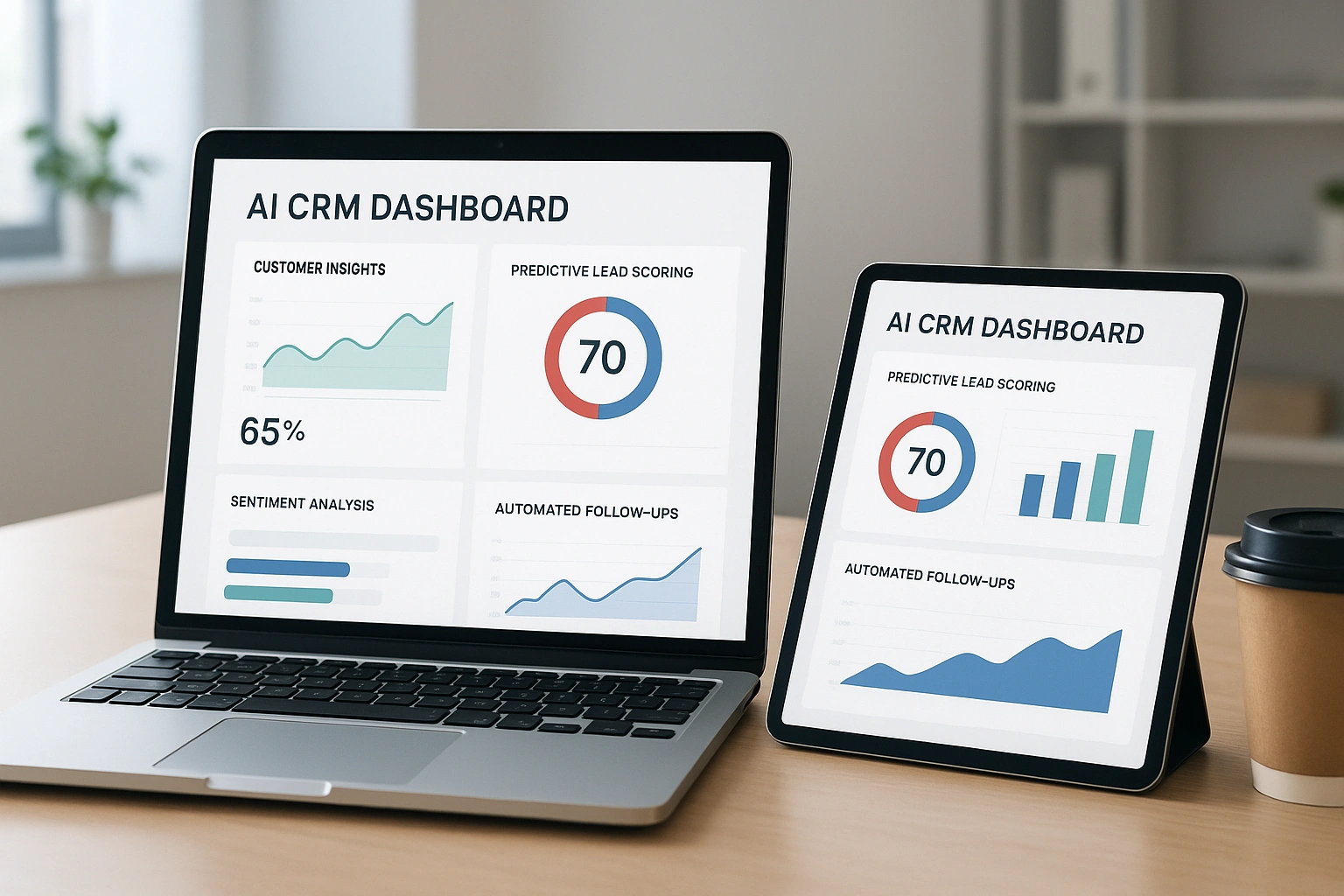
Are your customer relationships scattered across spreadsheets, sticky notes, and memory? Many small businesses face this challenge, and it can cost valuable sales. Around 40% of salespeople still rely on informal systems like spreadsheets to manage leads. It’s time for a smarter solution. AI CRM software can become your team’s central brain, streamlining follow-ups, predicting customer needs, and uncovering hidden opportunities. By adopting AI CRM software, you can automate tedious tasks, gain deeper insights, and optimize your workflow. Choosing the right AI CRM software allows your small business not just to keep up but to dominate the market.
What is AI CRM Software?
AI CRM software is a modern Customer Relationship Management platform powered by artificial intelligence. Unlike a traditional CRM, which simply stores customer information, AI CRM software actively analyzes your data to provide smart recommendations, automate routine tasks, and personalize communication. With AI CRM software, small teams can manage leads, follow up efficiently, and scale customer interactions in ways that would be impossible manually. By leveraging AI CRM software, businesses gain a powerful tool to turn raw data into actionable insights and more meaningful customer relationships.
The adoption of AI CRM software is growing rapidly, with the AI-powered CRM market expected to generate over $70 billion in new business revenue this year, according to Statista. For small businesses, AI CRM software is more than a fancy upgrade; it represents a fundamental shift in managing customer relationships. Using AI CRM software, you can transform a passive CRM into an active growth partner, while AI CRM software helps uncover insights and automate tasks that were once manual. By embracing AI CRM software, businesses can build stronger, smarter connections with their customers.
Why Your Small Business Needs an AI CRM
An AI CRM does more than just organize contacts. It revolutionizes your entire sales and marketing process, delivering tangible benefits that drive growth.
Automate Sales and Communication
AI can handle the time-consuming, repetitive tasks that bog down your sales team, allowing them to focus on what they do best: selling. It can automatically log calls and emails, send personalized follow-up sequences, and even schedule meetings.
Gain Deeper Customer Insights
AI algorithms can analyze customer emails, support tickets, and call transcripts to uncover valuable insights that would otherwise be hidden. This is where **AI customer management tools** shine.
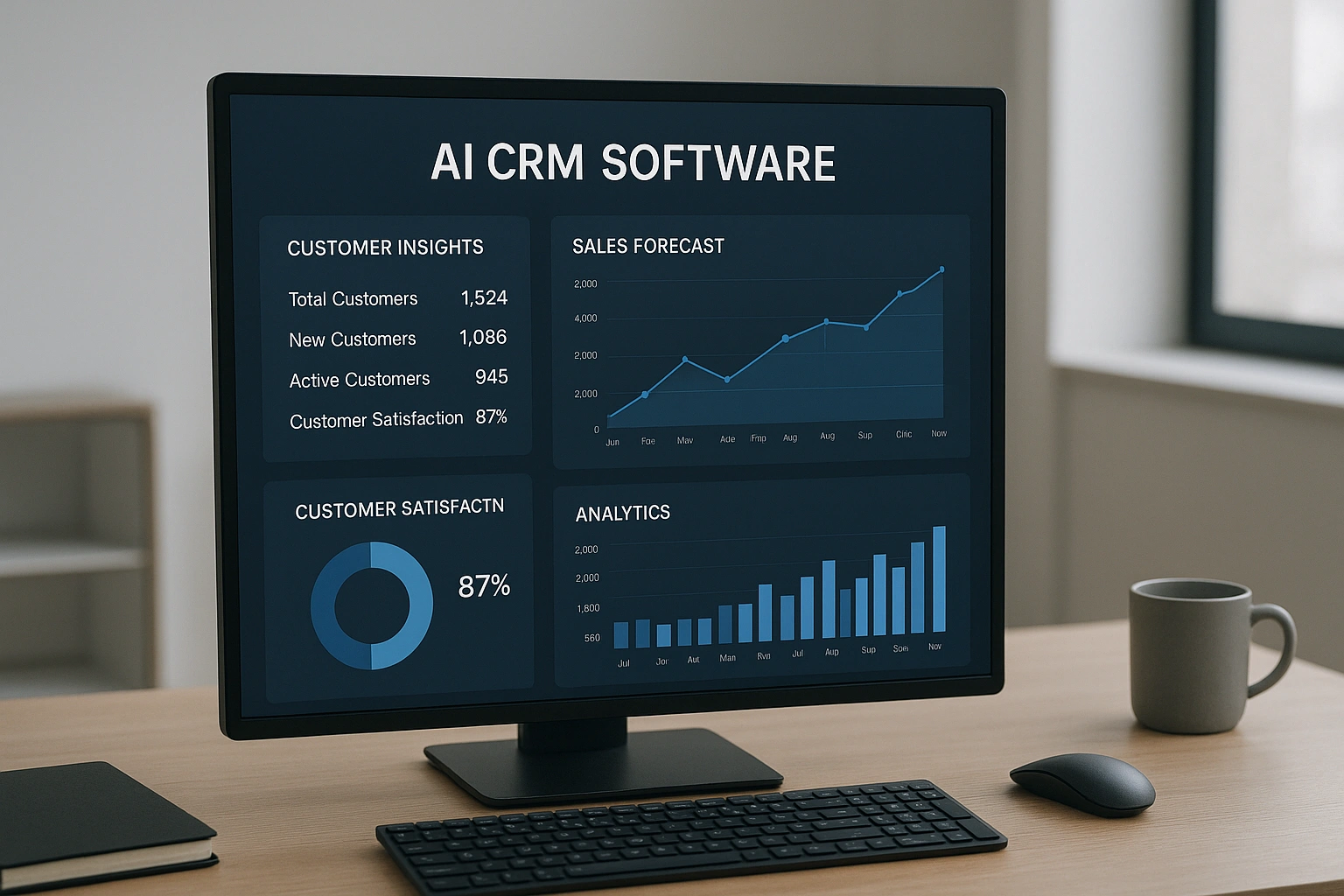
- Sentiment Analysis: Automatically detect if a customer is happy, frustrated, or at risk of churning.
- Predictive Analytics: Forecast future sales with stunning accuracy based on historical data.
- Lead Scoring: Automatically identify and prioritize your hottest leads so you know who to call first.
Personalize Customer Experiences at Scale
Today’s customers expect personalized interactions. AI makes this possible for a small team by tailoring communications based on a customer’s behavior, purchase history, and interests. For more insights into how AI is shaping modern business, see our article on digital finance trends.
How It Works: The Core Features of an AI CRM
The “AI” in AI CRM isn’t just a buzzword. It refers to a suite of specific technologies working behind the scenes to make your business smarter.
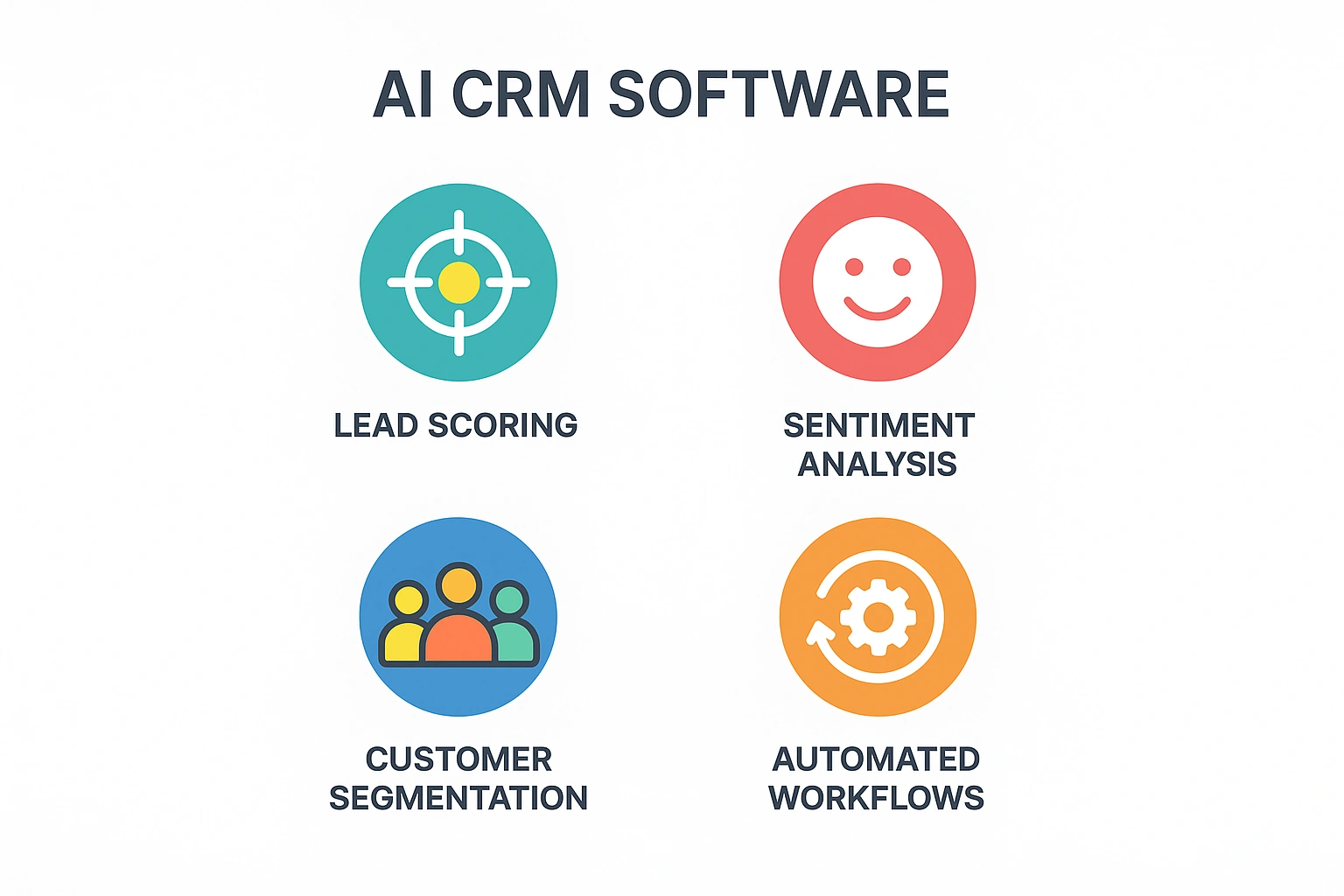
Here’s a breakdown of the key features and how they help:
| Feature | What It Does | Business Benefit |
|---|---|---|
| Predictive Lead Scoring | Analyzes lead behavior and demographics to predict who is most likely to buy. | Sales team focuses on high-potential leads, increasing conversion rates. |
| Sentiment Analysis | Scans customer emails and chats to determine their emotional tone (positive, negative, neutral). | Proactively identify and resolve issues with unhappy customers. |
| AI Chatbots | Engage website visitors 24/7, answer common questions, and qualify leads. | Capture leads you would otherwise miss and free up human agents. |
| Automated Data Entry | Automatically captures contact information from emails and business cards. | Saves hours of manual data entry and keeps your CRM clean and up-to-date. |
Real-Life Use Case: A Review of HubSpot’s AI Tools
To evaluate a leading **AI CRM software**, I implemented **HubSpot’s AI tools** (part of their Sales Hub) for a small B2B consulting firm. Their main challenge was a slow, manual lead follow-up process and an inability to prioritize a growing list of inbound leads.
The impact was immediate. We used HubSpot’s AI to build a simple lead scoring model based on job title and company size. The sales team instantly knew which leads to focus on. We then set up automated email sequences that were personalized using AI-generated text, which warmed up leads before the first call. The AI-powered conversation intelligence tool, which transcribes and analyzes sales calls, was a game-changer for coaching new reps.
| Pros | Cons |
|---|---|
| ✅ Extremely User-Friendly: The AI tools are intuitive and easy to set up. | ❌ Can Be Expensive: The most powerful AI features are in the higher-tier plans. |
| ✅ All-in-One Platform: Combines CRM, marketing, and service tools seamlessly. | ❌ Less Customizable: Not as flexible as more complex systems like Salesforce for very unique business processes. |
| ✅ Excellent Free Tools: The free HubSpot CRM is a great starting point for any small business. | ❌ AI is an Add-On: While the core CRM is free, the advanced AI is part of the paid hubs. |
Top AI CRM Software for Small Business Compared
HubSpot is a leader, but several other platforms offer powerful AI features perfect for small businesses. Here’s how they stack up.
| Tool | Key AI Features | Pros | Cons | Best For |
|---|---|---|---|---|
| HubSpot AI | Predictive lead scoring, AI content writer, conversation intelligence. | All-in-one platform, very easy to use, great free CRM to start. | Advanced AI requires pricier plans. | Ease of use and an all-in-one solution. |
| Zoho CRM (Zia) | Conversational AI (Zia), anomaly detection, workflow automation. | Extremely affordable, highly customizable, deep feature set. | Can have a steeper learning curve than HubSpot. | Businesses on a budget needing customization. |
| Freshworks (Freddy AI) | AI chatbots, predictive contact scoring, deal insights. | Strong focus on sales and support, clean UI. | AI features are less mature than some competitors. | Sales and support-focused teams. |
| Salesforce Einstein | Opportunity scoring, activity capture, forecasting. | The most powerful and advanced AI on the market. | Very expensive and complex; overkill for most small businesses. | Rapidly scaling businesses with a budget. |
Common Mistakes to Avoid When Implementing an AI CRM
An AI CRM is a powerful tool, but it’s not magic. Avoid these common implementation mistakes.
- Migrating “Dirty” Data: Garbage in, garbage out. If you import a messy, outdated spreadsheet into your new CRM, the AI’s predictions will be useless. Clean your data *before* you migrate.
- Lack of Team Training and Buy-In: A CRM is only effective if your team uses it consistently. Provide thorough training and explain the benefits to get everyone on board.
- Ignoring Customization: Don’t just use the default settings. Customize fields, pipelines, and reports to match your unique business process.
- Not Defining Your Goals: Why are you getting a CRM? To increase leads by 20%? To reduce customer churn by 10%? Set clear, measurable goals to track your success.
- Forgetting to Integrate: Your CRM should be the central hub of your business. Integrate it with your email, calendar, and other essential tools to create a single source of truth, a key point often emphasized by tech leaders like Google.
Expert Tips for Success
Get the most out of your **AI customer management tools** with these pro tips.
- Start with One Process: Don’t try to overhaul your entire business at once. Start by using the AI CRM to improve one specific area, like lead qualification.
- Trust the AI, but Verify: Let the AI’s lead scores guide your priorities, but don’t be afraid to use your own intuition. The AI is a tool to assist, not replace, your expertise.
- Use the Mobile App: Encourage your team to update the CRM on the go with the mobile app. This ensures data is always fresh and accurate.
- Regularly Review AI Recommendations: Check the insights and suggestions the AI provides. This is where you’ll find hidden opportunities for improvement.
“An AI CRM transforms your sales team from reactive order-takers to proactive advisors. It gives them the foresight to know what a customer needs before the customer even knows it themselves.”
– Marcus Chen, Sales Growth Consultant
Frequently Asked Questions (FAQ)
Q: What is the best AI CRM for a small business?
A: For most small businesses, HubSpot’s AI tools offer a fantastic combination of power and ease of use. Zoho CRM with its Zia AI is another excellent, budget-friendly option with deep customization capabilities.
Q: How does an AI CRM improve sales?
A: An AI CRM improves sales by automating lead scoring to prioritize the best prospects, forecasting revenue with high accuracy, providing AI-powered conversation insights to sales reps, and automating follow-up communications so no lead falls through the cracks.
Q: Is AI CRM software difficult to set up?
A: Modern cloud-based AI CRMs are designed to be user-friendly. While a full data migration can be complex, setting up the basic AI features like chatbots or email assistants can often be done in a matter of hours with no coding required.
Q: Can a small business afford an AI CRM?
A: Yes. Many leading CRM platforms include AI features in their affordable small business plans. The return on investment from increased sales efficiency and customer retention often makes an AI CRM one of the most profitable investments a small business can make.
Q: What are AI customer management tools?
A: AI customer management tools are a broader category that includes AI CRMs as well as AI-powered helpdesks, chatbots, and marketing automation platforms. They are all designed to use artificial intelligence to improve the customer lifecycle, from lead generation to post-sale support.
Conclusion
For a small business, managing customer relationships effectively is the key to growth. A spreadsheet just won’t cut it anymore. **AI CRM software** is the modern solution, providing the intelligence and automation needed to build better relationships, close more deals, and scale your business efficiently. By choosing the right platform and implementing it thoughtfully, you can turn your customer data into your most valuable asset and set your business on a path to sustainable success.