
Introduction
As a freelancer, you’re the CEO, the creative director, and often the overworked bookkeeper. Poor financial management is one of the main reasons freelance businesses fail. Juggling invoices, tracking expenses, and worrying about taxes can steal time from the work you love. AI accounting tools are designed to simplify this process for solo entrepreneurs. By using AI accounting tools, you can automate invoicing, track expenses, and stay on top of tax obligations. With AI accounting tools, managing your finances becomes easier, giving you the clarity and control you need to thrive.
What Are AI Accounting Tools?
AI accounting tools are a new type of financial software created to simplify bookkeeping for non-accountants. These AI accounting tools connect directly to your bank accounts, automatically track income and expenses, categorize transactions, and generate clear financial reports. Beyond acting as a digital ledger, AI accounting tools serve as a personal financial assistant, learning your spending habits, reminding you to send invoices, and estimating quarterly taxes. By leveraging AI accounting tools, freelancers and small business owners can stay on top of their finances effortlessly and avoid unexpected surprises.
The rise of the freelance economy has fueled the demand for these smart tools. With over 60 million freelancers in the U.S. alone, the need for user-friendly financial software is at an all-time high. AI is the key technology making this possible, turning a complex, error-prone task into a streamlined, automated workflow.
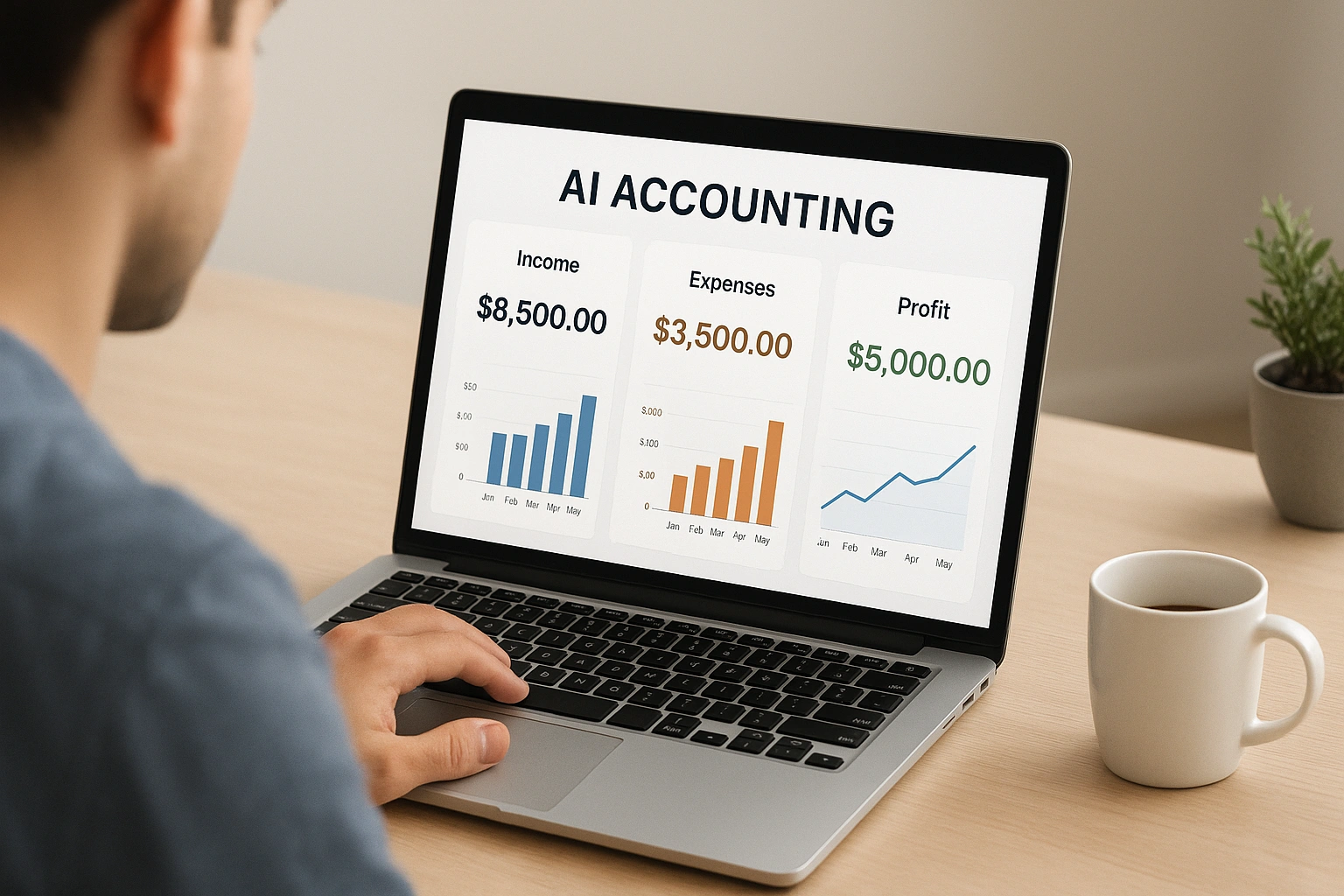
Why AI Accounting is a Freelancer’s Best Friend
Switching from a spreadsheet to an AI-powered system is one of the most impactful business decisions a freelancer can make. Here’s why.
Automate Invoicing and Get Paid Faster
Chasing payments is a freelancer’s nightmare. AI can completely automate this process. This is where **AI invoicing for freelancers** becomes a game-changer, directly impacting your cash flow.
- Create and send professional, recurring invoices automatically.
- Track when a client has viewed your invoice.
- Send automated, polite payment reminders for overdue invoices.
Simplify Tax Time and Maximize Deductions
AI tools are designed to make tax season less terrifying. They constantly track your income and expenses, categorizing them according to tax rules. The software can spot potential deductions you might have missed, from mileage to home office expenses, saving you a significant amount of money.
Track Project Profitability with Ease
Are you actually making money on that big project? AI accounting tools can help you track time and expenses against specific projects and clients. This gives you a clear picture of your most profitable work, allowing you to make smarter decisions about which clients to pursue and how to price your services. For more on how AI is shaping business finance, see our article on digital finance trends.
How It Works: Core Features for Freelancers
AI accounting software is built around a few key features designed to solve the biggest financial headaches for freelancers.
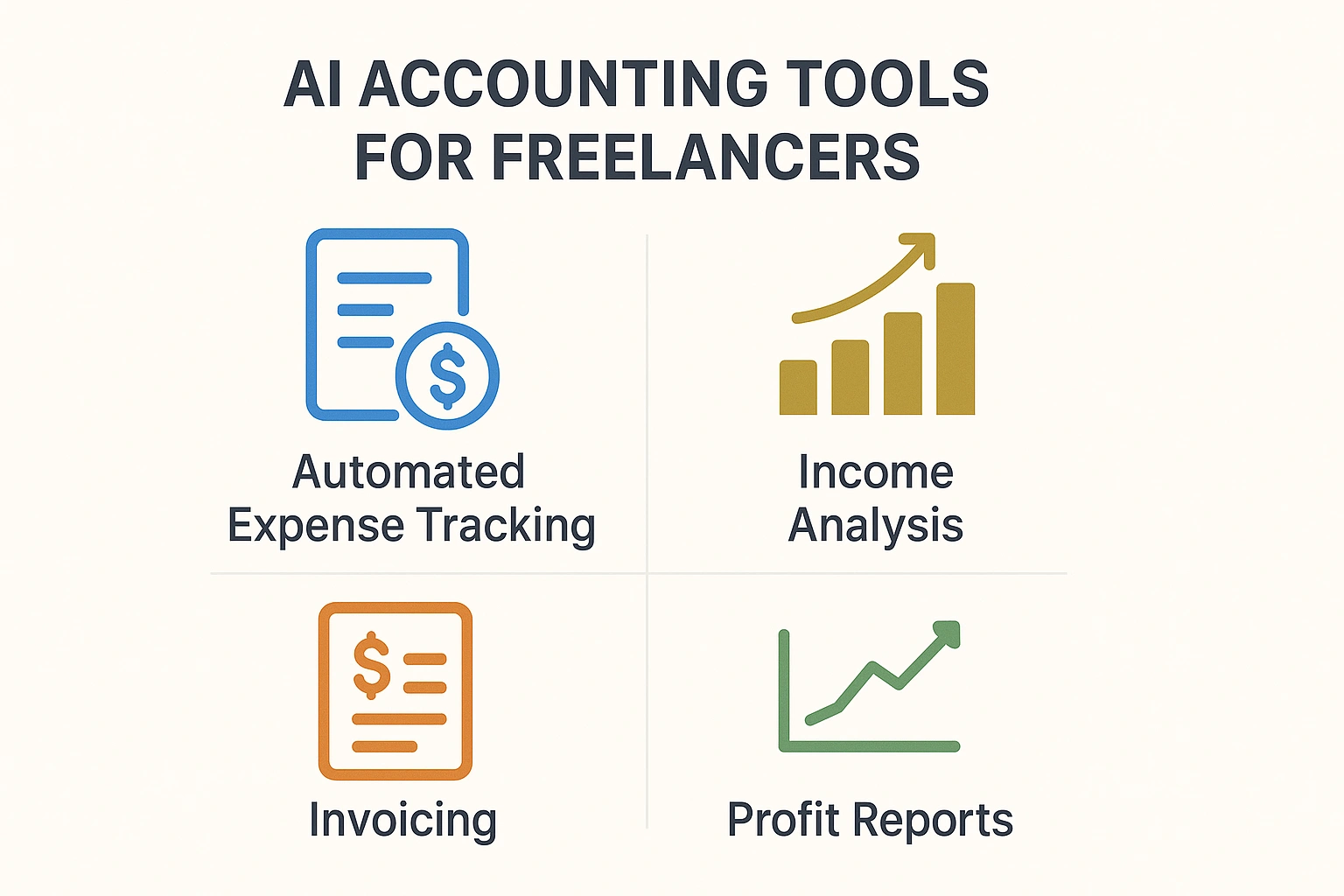
Here’s a breakdown of the essential features:
| Feature | What It Does | Benefit for Freelancers |
|---|---|---|
| Automated Expense Tracking | Connects to your bank to automatically import and categorize all your business expenses. | Ensures you never miss a potential tax deduction. |
| Quarterly Tax Estimation | Analyzes your real-time income and expenses to estimate how much you owe in quarterly taxes. | Avoids a surprise tax bill and helps you budget correctly. |
| Mileage Tracking | Uses your phone’s GPS to automatically track business-related driving for deductions. | Captures a significant deduction that many freelancers forget. |
| Smart Invoicing | Creates professional invoices, sends payment reminders, and accepts online payments. | Makes you look more professional and helps you get paid faster. |
Real-Life Use Case: A Review of FreshBooks
To evaluate a top-tier **AI accounting tool**, I used **FreshBooks** to manage the finances of a freelance writer for six months. Their biggest struggles were inconsistent invoicing and a complete lack of visibility into their business’s profitability.
FreshBooks was a perfect fit. Its interface is famously user-friendly and designed for creative professionals, not accountants. We set up recurring invoices for retainer clients, which were sent automatically each month. The AI-powered expense tracking was a huge time-saver; it learned to automatically categorize recurring expenses like software subscriptions and co-working space fees. The most valuable feature was the project profitability report, which clearly showed which clients were the most lucrative, leading the writer to adjust their rates for less profitable projects.
| Pros | Cons |
|---|---|
| ✅ Extremely User-Friendly: The interface is clean, intuitive, and built for freelancers. | ❌ Not a Full-Fledged Accounting Suite: Lacks some advanced features like inventory management for product-based businesses. |
| ✅ Excellent Invoicing Features: The best in the business for creating professional invoices and getting paid. | ❌ Per-User Pricing: Can get expensive if you need to add team members. |
| ✅ Great Customer Support: Known for its responsive and helpful human support team. | ❌ Mobile App is Good, Not Great: Lacks some of the features of the desktop version. |
Top AI Accounting Tools for Freelancers Compared
FreshBooks is a freelancer favorite, but other platforms offer excellent features tailored to the self-employed. Here’s how they compare.
| Tool | Key AI Features | Pros | Cons | Best For |
|---|---|---|---|---|
| FreshBooks | Automated expense categorization, smart invoicing, project profitability. | Very easy to use, excellent for invoicing and time tracking. | Less ideal for businesses that sell physical products. | Service-based freelancers and consultants. |
| QuickBooks Solopreneur | Automated expense/mileage tracking, receipt scanning, quarterly tax estimates. | Streamlined version of QuickBooks, great tax features. | A separate product from the main QuickBooks Online. | Freelancers who are primarily focused on tax preparation. |
| Wave | Free invoicing and accounting, receipt scanning. | The core accounting and invoicing are completely free. | AI features are very limited compared to paid tools. | Freelancers just starting out with a very tight budget. |
| Xero | Smart categorization, bank reconciliation, project tracking. | Very scalable, great for growing businesses, unlimited users. | Can be more complex than tools designed specifically for freelancers. | Freelancers who plan to grow into an agency. |
Common Mistakes Freelancers Make with Accounting AI
These tools are powerful, but they can’t read your mind. Avoid these common pitfalls.
- Not Separating Business and Personal Finances: This is the cardinal sin of freelance finance. Open a dedicated business bank account and connect only that account to your software.
- Forgetting to Track Cash Expenses: The bank feed is great, but it won’t catch cash transactions. Use the mobile app to snap photos of receipts for any cash purchases.
- Miscategorizing Expenses: While the AI is smart, you should always review its suggestions. A miscategorized expense could mean you miss out on a valuable deduction.
- Ignoring Your Reports: Don’t just let the data sit there. Check your Profit & Loss report every month to understand the financial health of your business.
- “Setting It and Forgetting It”: Spend 15-30 minutes every week in your accounting software. This small habit will keep your books clean and prevent a massive cleanup job at the end of the year, a tip often echoed by financial advisors on platforms like Google Finance.
Expert Tips for Success
Use your **AI accounting tools** like a seasoned pro with these best practices.
- Automate Everything You Can: Set up recurring invoices, payment reminders, and auto-categorization rules. The more you automate, the more time you save.
- Connect Your Payment Processor: Integrate your software with Stripe or PayPal to allow clients to pay invoices online directly. This gets you paid much faster.
- Do a Quarterly Review with Your Accountant: Invite your accountant to review your books each quarter. This helps you stay on track with your tax payments and get valuable strategic advice.
- Use the Project Features: Even if you charge a flat rate, track your time against projects. This data is invaluable for understanding your effective hourly rate and pricing future work.
“For freelancers, AI accounting software is the difference between running a business and just having a hobby. It provides the financial discipline and insight needed to be truly profitable and sustainable.”
– Elaine Pofeldt, Author of “The Million-Dollar, One-Person Business”
Frequently Asked Questions (FAQ)
Q: What is the best and easiest AI accounting tool for a freelancer?
A: For freelancers who prioritize ease of use and professional invoicing, FreshBooks is often considered the best choice. Its interface is designed specifically for service-based business owners, not accountants. QuickBooks Solopreneur is another excellent, streamlined option.
Q: Can AI help me calculate my quarterly taxes?
A: Yes, this is one of the most powerful features of AI accounting tools for freelancers. Platforms like QuickBooks and FreshBooks can analyze your income and expenses in real-time to provide an estimated quarterly tax payment, helping you avoid surprises and penalties.
Q: How does AI invoicing for freelancers work?
A: AI invoicing automates the entire process. It can create professional invoices from templates, send them out automatically, track when they’ve been viewed, and send automated payment reminders for overdue invoices, which significantly improves cash flow.
Q: Are there any free AI accounting tools?
A: While most comprehensive AI accounting platforms are paid, some tools like Wave offer free invoicing and accounting with basic features. However, for the powerful AI-driven expense categorization and tax estimation, a modest monthly subscription to a tool like FreshBooks or QuickBooks is usually required.
Q: Do I still need an accountant if I use AI software?
A: Yes. AI software is a tool that handles the day-to-day bookkeeping. An accountant is a strategic partner who provides tax planning advice, helps you structure your business, and can represent you in an audit. The software makes your accountant’s job easier (and cheaper for you), but it doesn’t replace them.
Conclusion
Being a successful freelancer means being a smart business owner, and that starts with staying on top of your finances. AI accounting tools help you manage your money without getting lost in spreadsheets. Using AI accounting tools, you can automate invoicing, track expenses, and simplify tax prep, freeing up hours each week. By relying on AI accounting tools, you gain clear insights into your cash flow and profitability. Integrating AI accounting tools into your workflow is a smart investment for both your business and peace of mind.