
Introduction
How much of your day is spent planning instead of actually working? Between endless email chains to book a single meeting and a to-do list that feels more like a wish list, our calendars often cause stress rather than structure. An AI scheduling assistant can change all that. With an AI scheduling assistant, your calendar can organize itself, removing the busywork of planning. Using an AI scheduling assistant helps optimize your day for focus and ensures your tasks fit into a realistic schedule. If you want to reclaim your time, an AI scheduling assistant is the tool that can tame your calendar and make your workday flow smoothly.
What is an AI Scheduling Assistant?
An **AI scheduling assistant** is a software tool that uses artificial intelligence to automatically manage your calendar and tasks. It goes far beyond a simple digital calendar. By connecting to your to-do list, email, and calendar, it can understand your priorities, find the best times for meetings, and intelligently schedule your tasks into the open slots in your day. A smart **AI calendar planner** acts as your personal time management strategist, building a dynamic, optimized schedule that adapts in real-time as your day changes.
The need for such tools is a direct response to the complexities of modern work. As reported by sources like the Harvard Business Review, context switching and poor time management are major drains on productivity. AI scheduling assistants are designed to solve this problem by reducing the cognitive load of planning, allowing you to focus your mental energy on your most important work.
Why an AI Planner is Your New Productivity Superpower
Adopting an AI scheduling assistant is about more than just a tidy calendar; it’s about fundamentally changing your relationship with time.
Eliminate the Back-and-Forth of Meeting Scheduling
Stop the endless email chains of “What time works for you?” An AI assistant can generate a smart booking link that shows your real-time availability, allowing others to book a time that works for everyone with a single click.
Turn Your To-Do List into a Realistic Plan
A long to-do list is overwhelming and often unrealistic. An AI planner takes your tasks and intelligently places them into the open slots in your calendar, a practice known as “time-blocking.”
- Ensure you have actual, dedicated time for every task.
- The AI automatically prioritizes tasks based on deadlines.
- If your day gets disrupted, the AI automatically reschedules your tasks for you.
Create and Protect Time for Deep Work
Fragmented days of back-to-back meetings kill productivity. An AI can analyze your schedule and automatically block out and defend chunks of time for focused, uninterrupted work, ensuring you have the space you need for your most important projects. For more on how AI is impacting business productivity, see our article on digital finance trends.
How It Works: The Brains Behind Your Calendar
An AI scheduling assistant works by integrating three key technologies to create a dynamic and intelligent planning system.
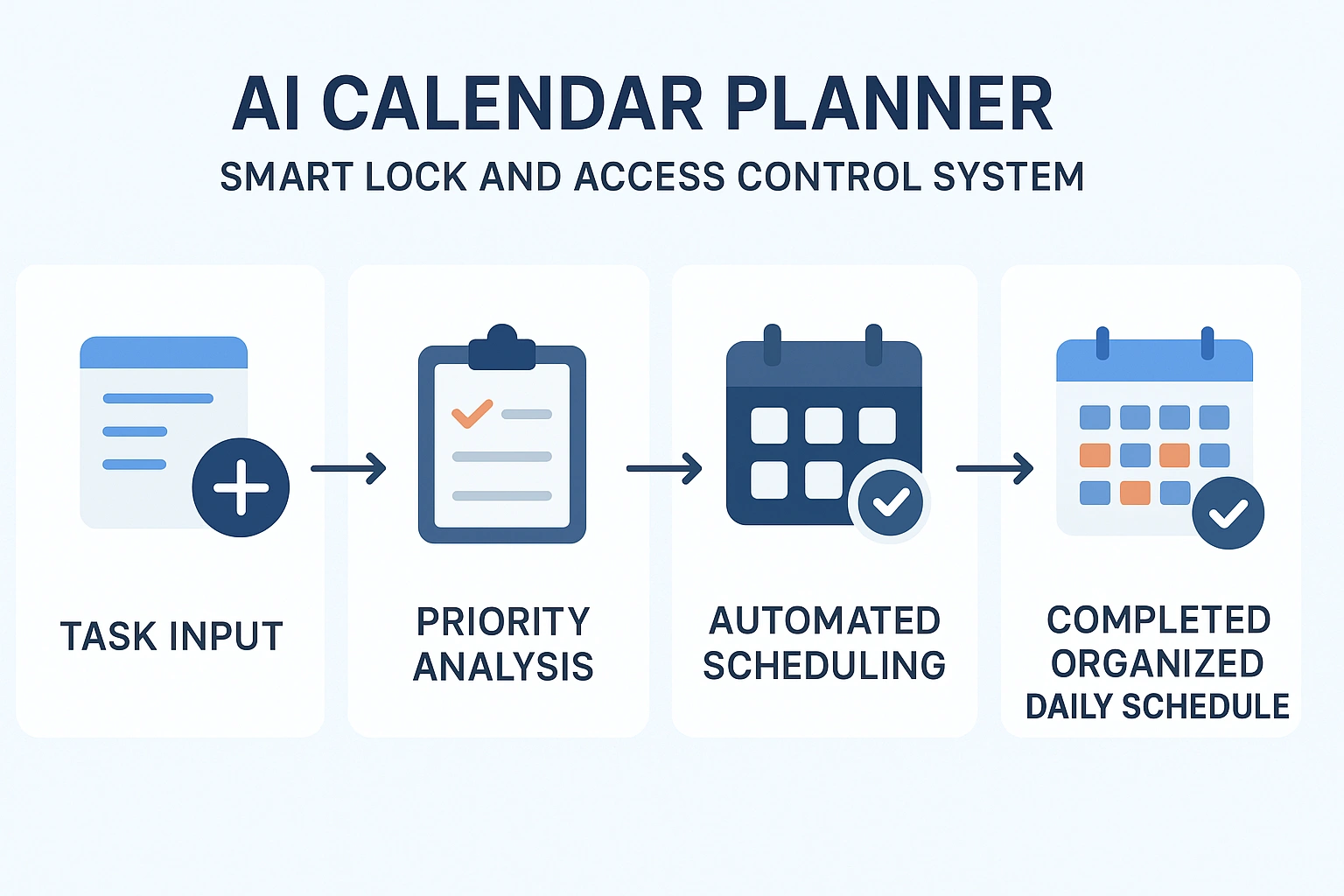
Here’s a breakdown of the core components:
| Component | What It Does | Why It’s Smart |
|---|---|---|
| Calendar Integration | Securely connects to your existing calendar (Google, Outlook, etc.) to see your meetings and free time. | It works with your existing schedule, not against it. |
| Task & Priority Engine | You provide a list of tasks with their deadlines and relative priorities. | The AI uses this information to make intelligent decisions about what you should work on next. |
| Dynamic Scheduling Algorithm | The AI analyzes your calendar and task list to find the optimal time for each task, then automatically adds it to your calendar. | It builds a flexible plan that can automatically adapt and reschedule as new, urgent things come up. |
Real-Life Use Case: A Review of Motion
To evaluate a leading **AI scheduling assistant**, I used **Motion** to manage my work schedule for a month. My biggest challenge was a long, intimidating to-do list and a tendency for small tasks to fall through the cracks.
Motion’s core feature is its ability to turn a task list into a concrete schedule. I dumped all my tasks into the app, assigned priorities and deadlines, and watched as Motion’s AI automatically populated the open slots in my Google Calendar. The effect was transformative. Instead of staring at a list, I had a clear, actionable plan for each day. When an unexpected meeting was added to my calendar, Motion instantly and automatically rescheduled my other tasks around it. The meeting booking feature was also excellent, making it easy to schedule calls without the usual email ping-pong.
| Pros | Cons |
|---|---|
| ✅ Excellent Task Scheduling AI: The core feature of automatically building your schedule is powerful and effective. | ❌ It’s a Premium Tool: Motion is a subscription-based service with no free plan after the trial. |
| ✅ All-in-One Solution: Combines a calendar, task manager, and project manager in one app. | ❌ Can Feel Over-Automated: Some users may prefer more manual control over their schedule. |
| ✅ Great for Teams: The team features allow for intelligent project planning and resource allocation. | ❌ Mobile App is Less Powerful: The desktop and web apps are more feature-rich than the mobile version. |
Top AI Scheduling Assistants Compared
Motion is a leader in AI task scheduling, but other tools focus on different aspects of calendar management. Here’s how they compare.
| Tool | Key AI Features | Pros | Cons | Best For |
|---|---|---|---|---|
| Motion | AI task scheduling, smart meeting booking, project management. | Fully automates your daily schedule, great for busy professionals. | Premium subscription model. | Building a complete, automated daily plan from a to-do list. |
| Reclaim.ai | Intelligent habit scheduling, flexible time-blocking, smart 1:1 meetings. | Excellent for defending focus time and integrating personal habits. | Task management is less robust than Motion’s. | Optimizing your existing calendar for work-life balance. |
| Clockwise | Smart calendar optimization for teams, automatically moves meetings to create focus time. | Fantastic for creating long blocks of uninterrupted time for entire teams. | Primarily focused on optimizing meetings, not individual tasks. | Teams that want to reduce calendar fragmentation. |
| Calendly | Smart meeting booking, automated workflows (e.g., sending reminder emails). | The industry standard for easy external meeting scheduling, great free plan. | It is not a full calendar planner; it’s a meeting scheduler. | Scheduling meetings with people outside your organization. |
Common Mistakes to Avoid with AI Schedulers
An AI planner is a powerful tool, but it requires the right input to work effectively. Avoid these common mistakes.
- Not Giving It All Your Tasks: The AI can only schedule the tasks you tell it about. If you keep a separate “hidden” to-do list, the AI can’t create a realistic plan for you.
- Setting Unrealistic Deadlines: If you tell the AI that 20 hours of work is due tomorrow, it will try its best but will create a stressful, impossible schedule. Be realistic with your deadlines.
- Ignoring Priorities: You need to tell the AI what’s important. Use the priority settings (e.g., high, medium, low) to help it make smart decisions about what to schedule first.
- Fighting the System: The point of these tools is to reduce the mental effort of planning. Trust the AI to build your initial schedule, and then make minor adjustments as needed.
- Forgetting to Integrate Your Calendars: Make sure to connect both your work and personal calendars so the AI has a complete picture of your availability and doesn’t schedule a work task during your kid’s soccer game. As productivity experts cited by Google often note, a unified view is key to work-life balance.
Expert Tips for Success
Use your **AI calendar planner** like a pro with these best practices.
- Conduct a Weekly Review: Spend 20 minutes at the end of each week reviewing what you accomplished and adding your tasks for the upcoming week.
- Use Natural Language: Most tools allow you to create tasks with natural language, like “Draft the report for John by Friday at 5 pm.”
- Block Out Personal Time First: Before you let the AI schedule your work, manually block out time for lunch, exercise, and family commitments.
- Use a “Buffer” Setting: Set up your meeting scheduler to automatically add a 15-minute buffer before and after each meeting to give you time to prepare and decompress.
“An AI scheduler doesn’t just manage your time; it forces you to be honest about how much time you actually have. It’s the ultimate tool for turning vague intentions into a concrete, achievable plan.”
– A leading productivity expert
Frequently Asked Questions (FAQ)
Q: What is the best AI scheduling assistant?
A: The ‘best’ tool depends on your needs. For individuals and teams who want to automatically schedule their tasks into their calendar, Motion is a leading choice. For those focused on optimizing their existing calendar for deep work and better meeting scheduling, Reclaim.ai and Clockwise are excellent. For simple external meeting booking, Calendly’s AI features are very effective.
Q: How does an AI calendar planner work?
A: An AI calendar planner connects to your digital calendar (like Google Calendar or Outlook). You provide it with a list of your tasks and their priorities/deadlines. The AI then analyzes your existing meetings and commitments and intelligently finds the optimal time slots to schedule your tasks, creating a realistic daily plan for you.
Q: Can an AI assistant schedule meetings for me?
A: Yes. Most AI scheduling assistants can eliminate the back-and-forth emails of booking a meeting. You can send a booking link that shows your real-time availability, allowing the other person to pick a time that works for them. The AI then automatically adds the event to both of your calendars.
Q: Will an AI scheduling assistant make my calendar too rigid?
A: No, quite the opposite. A key feature of these tools is flexibility. If an urgent meeting comes up, the AI will automatically reshuffle your scheduled tasks to fit the new event, ensuring your plan adapts to the reality of your day without you having to manually rearrange everything.
Q: Are there free AI scheduling assistants?
A: Yes, many tools offer free plans with basic features. Calendly has a great free tier for simple meeting booking. Reclaim.ai and Clockwise also have free plans for individual calendar optimization. The most advanced task-scheduling features, however, are typically part of a paid subscription.
Conclusion
The constant pressure to stay productive can be overwhelming, but an AI scheduling assistant can transform how you manage your day. Using an AI scheduling assistant helps automate tedious planning, allowing your schedule to adapt intelligently as priorities change. With an AI scheduling assistant handling your calendar, you can focus on meaningful work instead of juggling tasks. If you want to regain control and efficiency, it’s time to let an AI scheduling assistant organize your day seamlessly.