
Introduction
Do you wish you could support your customers 24/7, answering questions and solving problems even while you sleep? For a small business, providing constant support can feel impossible, but AI chatbots for business make it achievable. A staggering 88% of customers expect a response within an hour, and AI chatbots for business help you meet that demand without overloading your team. These AI chatbots for business act as an intelligent, tireless front-line support team, handling inquiries and guiding customers efficiently. By using AI chatbots for business, you can transform customer service from a costly necessity into a growth-driving asset.
What Are AI Chatbots for Business?
ChatGPT said:
The chatbot market is booming, expected to reach nearly $1.3 billion by 2025, as businesses of all sizes adopt AI chatbots for business to enhance customer interactions. For a small business, AI chatbots for business act as a force multiplier, enabling instant, scalable support without the need for a large team. By using AI chatbots for business, you can generate leads automatically while improving response times. Modern AI chatbots for business make exceptional customer service achievable and cost-effective, turning support into a growth driver rather than a luxury.
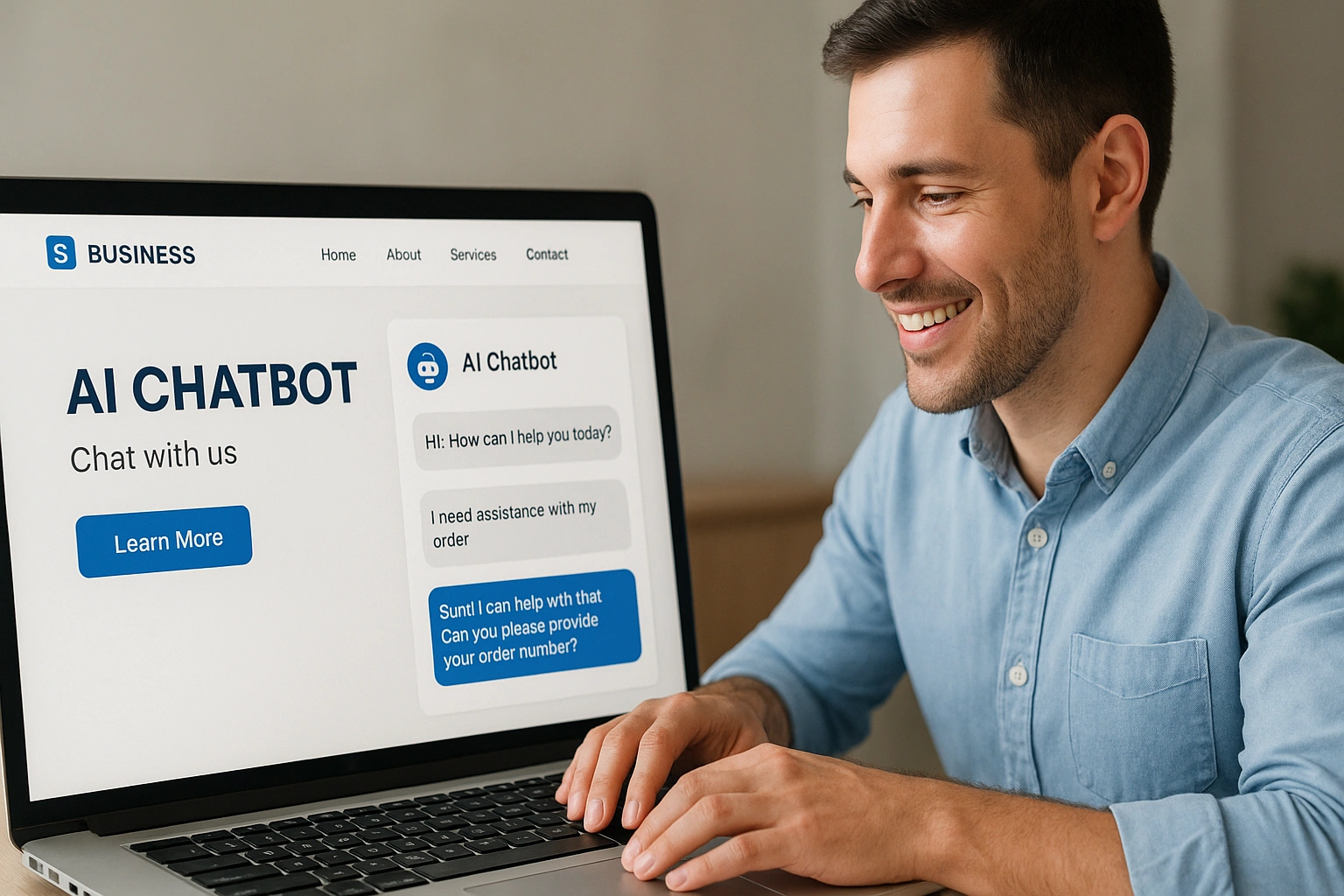
Why a Chatbot is Your Business’s Best Hire
Implementing an AI chatbot is one of the highest-ROI decisions a small business can make. The benefits extend far beyond just answering questions.
Provide Instant, 24/7 Support
Your business may close at 5 PM, but your customers’ questions don’t. A chatbot is always on, providing instant answers to common queries about shipping, pricing, or product features. This immediate assistance dramatically improves customer satisfaction and reduces support ticket volume.
Drastically Reduce Support Costs
A chatbot can handle a significant percentage of your inbound support queries. This frees up your human agents to focus on high-value, complex problems that require a human touch. This leads to a more efficient support team and lower operational costs.
- Answer up to 80% of routine questions automatically.
- Reduce the need to hire additional support staff as you grow.
- Provide instant support, reducing customer churn.
Generate and Qualify Leads Automatically
A chatbot is also a powerful sales tool. It can engage website visitors, ask qualifying questions, book meetings directly into your calendar, and route hot leads to your sales team in real-time. For more on how AI is transforming business operations, see our article on digital finance trends.
How It Works: The Anatomy of a Smart Conversation
Modern AI chatbots are powered by sophisticated technology that allows them to understand and respond like a human. Here are the core components.
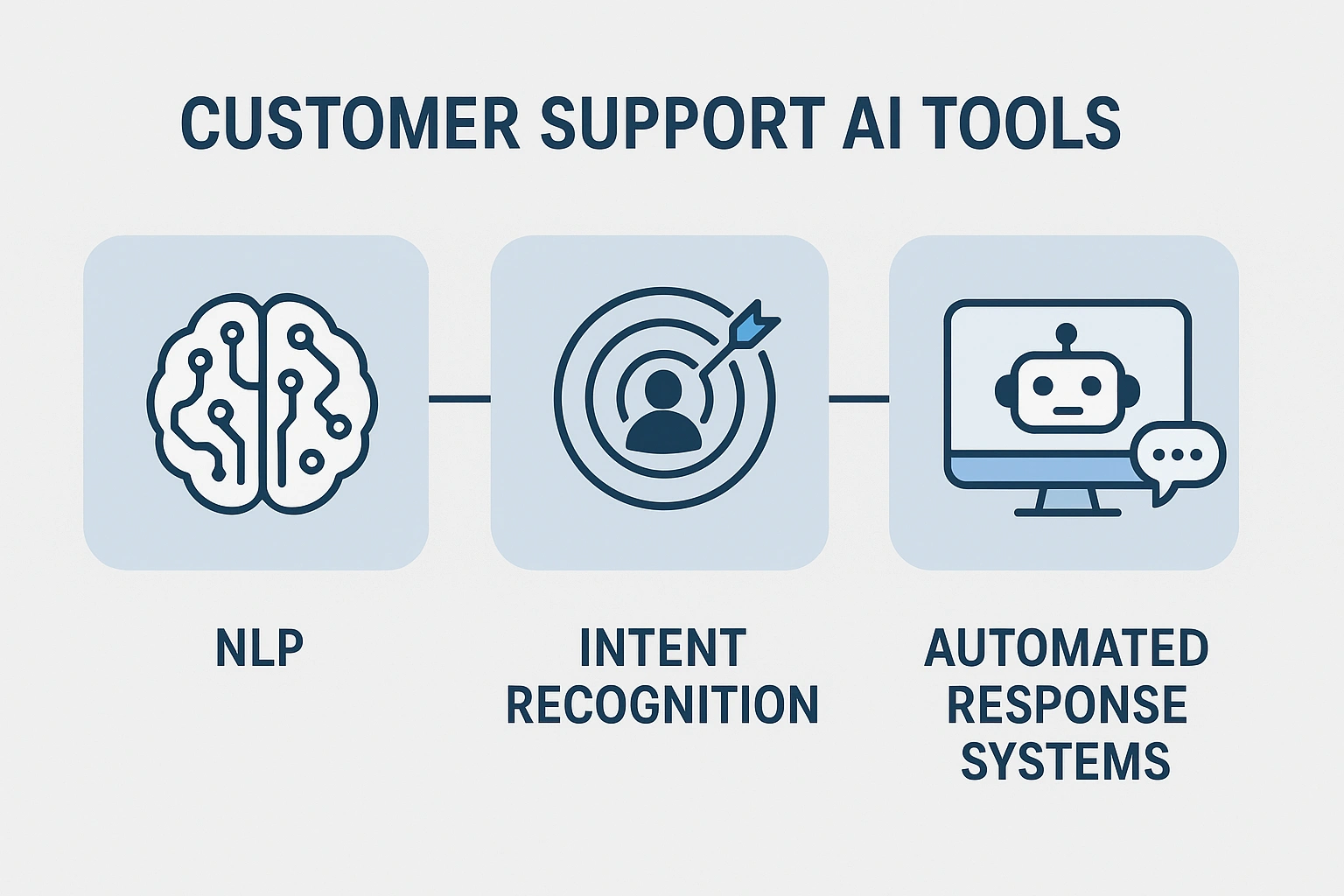
Here’s a breakdown of a typical customer interaction:
| Step | Action | Technology Used | Example |
|---|---|---|---|
| 1. User Input | A customer types a question into the chat widget. | User Interface (UI) | “whats ur return policy” |
| 2. Intent Recognition | The AI analyzes the message to understand the user’s goal, ignoring typos. | Natural Language Processing (NLP) | The AI understands the user wants to know about the “Return Policy.” |
| 3. Response Generation | The chatbot pulls the correct, pre-written answer from its knowledge base. | Generative AI / Knowledge Base | “Our return policy allows for returns within 30 days of purchase. Would you like to start a return?” |
| 4. Human Handover (If Needed) | If the user asks a complex question, the bot transfers them to a live agent. | Live Chat Integration | “Let me connect you with a support specialist who can help with that.” |
Real-Life Use Case: A Review of Tidio
To see how **AI chatbots for business** perform in a real-world setting, I set up **Tidio** on a small e-commerce website. The primary goals were to reduce the number of “Where is my order?” emails and to proactively engage visitors to decrease cart abandonment.
Tidio’s visual chatbot builder made the setup incredibly easy. I created a chatbot that could answer order status questions by integrating with Shopify. I also built a proactive chat that triggered when a user had items in their cart for more than three minutes, offering a 10% discount code. In the first month, the chatbot handled 60% of all incoming support queries, and the cart abandonment chatbot recovered over $1,500 in sales.
| Pros | Cons |
|---|---|
| ✅ Generous Free Plan: The free plan includes live chat and a limited number of chatbot conversations. | ❌ AI (Lyro) is a Paid Add-On: The most advanced conversational AI feature costs extra. |
| ✅ Very Easy to Use: The visual editor is one of the most intuitive on the market. | ❌ Fewer Advanced Features: Lacks some of the deep analytics and CRM features of more enterprise-focused tools. |
| ✅ All-in-One Tool: Combines live chat, chatbots, and email marketing in one platform. | ❌ Can Get Pricey: The cost can add up as you add more features and conversations. |
Top AI Chatbots for Small Business Compared
Tidio is a fantastic starting point, but the chatbot landscape is diverse. Here’s how it compares to other top **customer support AI tools**.
| Tool | Key AI Features | Pros | Cons | Best For |
|---|---|---|---|---|
| Tidio | Visual chatbot builder, AI conversational bot (Lyro), live chat. | Great free plan, very easy to use, all-in-one platform. | Advanced AI is a paid add-on. | Small businesses wanting an easy, affordable start. |
| Intercom | Advanced AI chatbot (Fin), proactive messaging, deep integrations. | Extremely powerful for sales and support, highly customizable. | Very expensive, can be complex to set up. | Well-funded startups focused on lead generation. |
| Zendesk AI | AI-powered bots, intelligent routing, integrated with helpdesk. | Seamlessly connects with a powerful support ticketing system. | Best value when using the full Zendesk suite. | Businesses with a high volume of support tickets. |
| Drift | Conversational marketing & sales AI, real-time lead qualification. | Unmatched for B2B sales and marketing automation. | Premium pricing, heavily focused on sales over support. | B2B companies with a dedicated sales team. |
Common Mistakes to Avoid with Chatbots
A bad chatbot is worse than no chatbot at all. Avoid these common implementation mistakes.
- Hiding the Human: Never make it impossible for a user to reach a human agent. A frustrating chatbot loop is a quick way to lose a customer.
- Not Training Your Bot: An AI chatbot needs to be fed information. Build a comprehensive knowledge base of your FAQs for it to draw from.
- Making It Too Robotic: Give your chatbot a name and a personality that aligns with your brand. A little bit of character goes a long way.
- Asking Too Many Questions: Don’t force users through a 10-step qualification process. Keep your chatbot’s questions concise and to the point.
- Forgetting to Analyze Conversations: Regularly review your chatbot’s conversation logs. They are a goldmine of information about what your customers are asking for and where your bot is failing. As publications like TechCrunch often report, data analytics are key to AI success.
Expert Tips for Success
Implement your **AI chatbot for business** like a pro with these best practices.
- Define One Clear Goal: Is your chatbot’s primary job to answer support questions, book demos, or qualify leads? Start with one main goal and build its conversations around that.
- Be Proactive, Not Annoying: Use proactive chat pop-ups on key pages (like pricing or checkout) but don’t bombard every visitor on every page.
- Use Buttons and Quick Replies: Guide the conversation and make it easier for users by offering buttons for common questions.
- Set Expectations: Start the conversation by letting users know they’re talking to a bot. For example, “Hi! I’m [Bot Name], the AI assistant. I can help with…”
“The best chatbots don’t try to be human. They try to be helpful. Their goal is to get the customer to the right answer or the right person as quickly as possible.”
– Sarah Gibbons, Customer Experience Expert
Frequently Asked Questions (FAQ)
Q: What is the best AI chatbot for a small business?
A: For an easy-to-use, all-in-one solution, Tidio is a great starting point with a generous free plan. For businesses focused on sales and lead generation, Intercom offers more advanced features. For those already in the Zendesk ecosystem, the Zendesk AI chatbot is a powerful, integrated option.
Q: How much do AI chatbots cost?
A: Pricing varies widely. Many platforms like Tidio offer free plans with basic chatbot functionality. Paid plans typically range from $30 to $100+ per month, depending on the number of conversations, users, and advanced features.
Q: Can a chatbot handle complex customer issues?
A: AI chatbots are best at handling common, repetitive questions. For complex or emotionally charged issues, the best practice is for the chatbot to collect initial information and then seamlessly hand the conversation over to a human support agent.
Q: Is it difficult to build an AI chatbot?
A: Not anymore. Modern chatbot platforms are designed with no-code, visual builders. You can create a functional chatbot by dragging and dropping elements and writing conversation flows, often without needing a developer.
Q: Do customers actually like using chatbots?
A: Yes, when they work well. Customers appreciate the instant, 24/7 responses for simple queries. The key to success is ensuring the chatbot is helpful and provides an easy way to reach a human when necessary.
Conclusion
For a small business, delivering 24/7 support is now achievable thanks to AI chatbots for business. AI chatbots for business improve customer satisfaction, streamline support, and help drive sales efficiently. By using AI chatbots for business to handle routine inquiries and qualify leads automatically, your team can focus on building meaningful relationships and tackling complex challenges. In 2025, AI chatbots for business aren’t just tools—they’re essential team members for growth and success.