
Introduction
Imagine a classroom where every student is not just present, but truly *engaged*. A space where disruptions are minimal, learning flows seamlessly, and teachers can focus more on inspiring minds rather than managing behavior. This isn’t a futuristic dream; it’s becoming a reality in 2025 thanks to revolutionary advancements in educational technology.
Traditional classroom management often consumes significant teacher time and energy, sometimes overshadowing the core mission of teaching. What if intelligent tools could assist in creating a dynamic, focused, and highly interactive learning environment? This guide delves into the best AI classroom management apps for engagement in 2025. We’ll explore cutting-edge student engagement AI apps and smart solutions that empower educators to optimize their learning environments, streamline daily routines, and foster unprecedented levels of student participation and positive behavior.
What is AI Classroom Management?
At its core, AI classroom management refers to the application of artificial intelligence technologies to assist educators in organizing, monitoring, and optimizing the learning environment. This goes far beyond simple digital roll calls; it encompasses intelligent systems that can analyze student engagement, identify potential behavioral issues before they escalate, personalize learning pathways to maintain interest, and automate routine tasks that traditionally pull teachers away from direct student interaction.
In 2025, the relevance of AI classroom management is rapidly increasing. As classrooms become more diverse and technology-rich, teachers face new challenges in maintaining focus, addressing individual needs, and preventing digital distractions. AI offers proactive solutions by providing data-driven insights and automated support. Future trends suggest AI will become even more sophisticated in interpreting non-verbal cues, offering real-time interventions, and creating adaptive learning spaces.
According to a 2025 report by All About AI, a significant 51% of educators have already incorporated AI-powered games to make learning interactive and engaging, directly contributing to improved classroom environments. Furthermore, a study by Open2Study noted that 51% of teachers use AI-powered educational games in their classrooms, further solidifying the role of AI in fostering engagement and improving classroom dynamics.
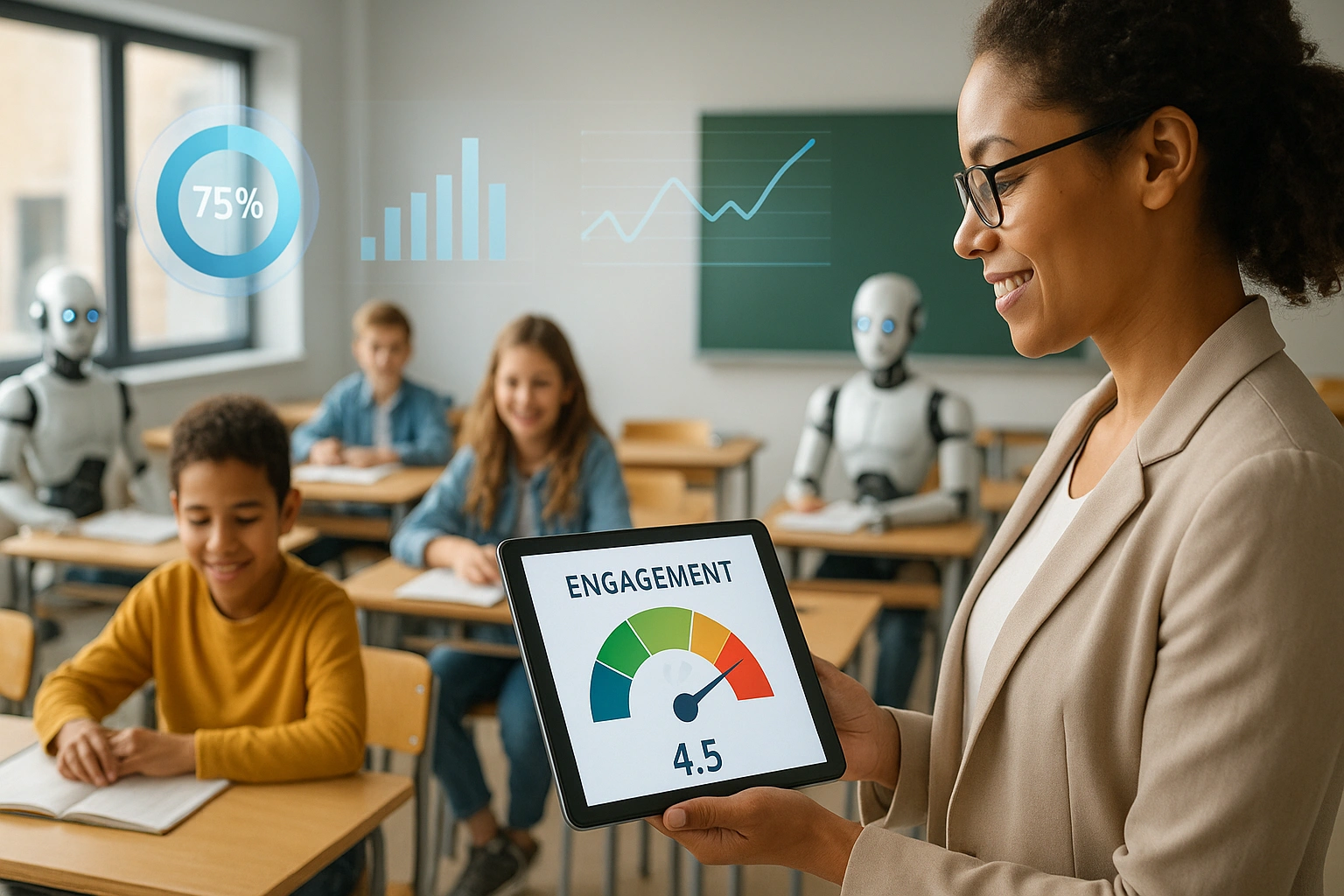
Why It Matters: Key Benefits of AI Classroom Management Apps
Integrating AI classroom management apps isn’t just about modernizing; it’s about fundamentally improving the teaching and learning experience. These student engagement AI apps offer a host of benefits that directly address the multifaceted challenges faced by educators today.
Boost Student Engagement and Participation
One of the most profound impacts of AI in the classroom is its ability to create more dynamic and interactive learning experiences, which directly translates to higher student engagement.
- Personalized Learning Paths: AI can adapt content and activities to individual student paces and preferences, ensuring tasks are neither too easy nor too difficult, thus maintaining optimal engagement.
- Gamified Learning: Many AI apps integrate game-like elements, points, and rewards, transforming lessons into exciting challenges that motivate students.
- Interactive Activities: AI can generate interactive quizzes, polls, and collaborative tasks in real-time, encouraging active participation from all students.
Proactive Behavior Monitoring & Intervention
AI can act as an extra pair of eyes and ears, helping teachers identify and address potential disruptions before they fully materialize, creating a more harmonious learning environment.
- Early Warning Systems: Some advanced AI systems can monitor student attention levels (e.g., through eye-tracking in remote settings, or analyzing interaction data) and alert teachers to potential disengagement.
- Pattern Identification: AI can analyze behavioral data over time to identify patterns in individual students or groups, helping teachers understand root causes of behaviors.
- Automated Reminders: For digital tasks, AI can send gentle nudges to students who are falling behind or off-task, reducing the need for constant teacher intervention.
Streamline Routine Administrative Tasks
Beyond direct classroom interaction, AI significantly reduces the administrative burden on teachers, freeing them to focus on instruction and student support.
- Automated Attendance: Digital check-ins or facial recognition (with appropriate privacy safeguards) can automate attendance tracking.
- Progress Tracking & Reporting: AI can compile and analyze student performance data, generating reports for teachers, parents, and administrators, simplifying documentation.
- Resource Management: AI can help organize digital resources, allocate virtual tools, and manage access permissions for student groups.
Provide Data-Driven Insights for Teachers
AI’s ability to collect and analyze vast amounts of data offers teachers unprecedented insights into classroom dynamics and individual student needs.
- Engagement Metrics: Teachers gain a clear picture of who is participating, who is struggling, and which activities are most effective.
- Behavioral Trends: AI can highlight shifts in student behavior, allowing teachers to intervene proactively and tailor their management strategies.
- Instructional Optimization: Insights from AI data can help teachers refine their teaching methods, adjust lesson plans, and provide targeted support where it’s most needed. For more ways AI can support educators, consider exploring how AI streamlines various administrative tasks, benefiting a range of professional settings.
How AI Classroom Management Apps Work: Core Features & Functionality
The effectiveness of AI classroom management apps stems from their sophisticated integration of artificial intelligence into practical educational functionalities. These student engagement AI apps leverage various AI subfields to create a more responsive and efficient learning environment. Here’s a look at their core features and underlying mechanisms.
- Data Collection and Analysis:
- Engagement Tracking: AI monitors interactions within digital learning platforms, tracking participation in discussions, time spent on tasks, completion rates, and performance in activities.
- Behavioral Indicators: For more advanced systems, AI might analyze non-verbal cues (e.g., in video conferences, if privacy is strictly managed), or patterns in online activity (e.g., frequent tab switching) to flag potential disengagement or off-task behavior.
- Performance Metrics: Collects data from quizzes, assignments, and projects to build a comprehensive profile of student progress.
- Personalized Interventions & Adaptations:
- Adaptive Learning Paths: Based on collected data, AI can suggest or automatically adjust the difficulty of tasks, recommend supplementary resources, or create personalized practice exercises for individual students.
- Automated Nudges: If a student is identified as disengaged or struggling, the AI can send personalized, supportive messages or prompt them to refocus on the task.
- Differentiated Content: AI helps teachers quickly generate variations of content or instructions to cater to diverse learning styles or readiness levels.
- Communication & Collaboration Tools:
- Smart Notifications: AI can send intelligent notifications to teachers about student progress or potential issues, ensuring they stay informed without being overwhelmed.
- Group Management: Facilitates the creation and management of dynamic student groups for collaborative projects, often suggesting optimal groupings based on skills or learning needs.
- Automated Reporting: Generates summary reports on class performance, individual student engagement, and behavioral trends for teacher and parent communication.
- Teacher Dashboard & Insights:
- Real-time Overview: Provides teachers with a clear, real-time dashboard displaying key metrics like overall class engagement, individual student status, and pending tasks.
- Predictive Analytics: Some advanced AI tools can identify students at risk of falling behind or exhibiting challenging behaviors, allowing for proactive human intervention.
- Instructional Recommendations: Based on class performance, AI might suggest modifications to teaching strategies or highlight areas needing reteaching.
AI Classroom Management Workflow: Enhancing the Learning Ecosystem
| Phase | Description | AI’s Role | Teacher’s Role |
|---|---|---|---|
| 1. Setup & Customization | Teacher integrates app, sets rules, customizes parameters. | Learns class structure, student profiles, and teacher preferences. | Defines classroom norms, personalizes app settings. |
| 2. Real-time Monitoring | App observes student activity/engagement during lessons. | Collects data (participation, focus, progress), identifies patterns. | Teaches, interacts, uses dashboard for quick overview. |
| 3. Intervention & Adaptation | AI offers suggestions or automates minor interventions. | Sends nudges, recommends content, flags issues for teacher. | Approves/overrides AI, provides human-centric guidance. |
| 4. Feedback & Reporting | AI summarizes class/individual performance and behavior. | Generates reports, identifies trends, suggests areas for improvement. | Analyzes data, communicates with students/parents, adjusts strategies. |
| 5. Continuous Improvement | Teacher refines app use based on outcomes. | Learns from teacher adjustments, improves predictive accuracy. | Optimizes app settings, integrates AI insights into pedagogy. |
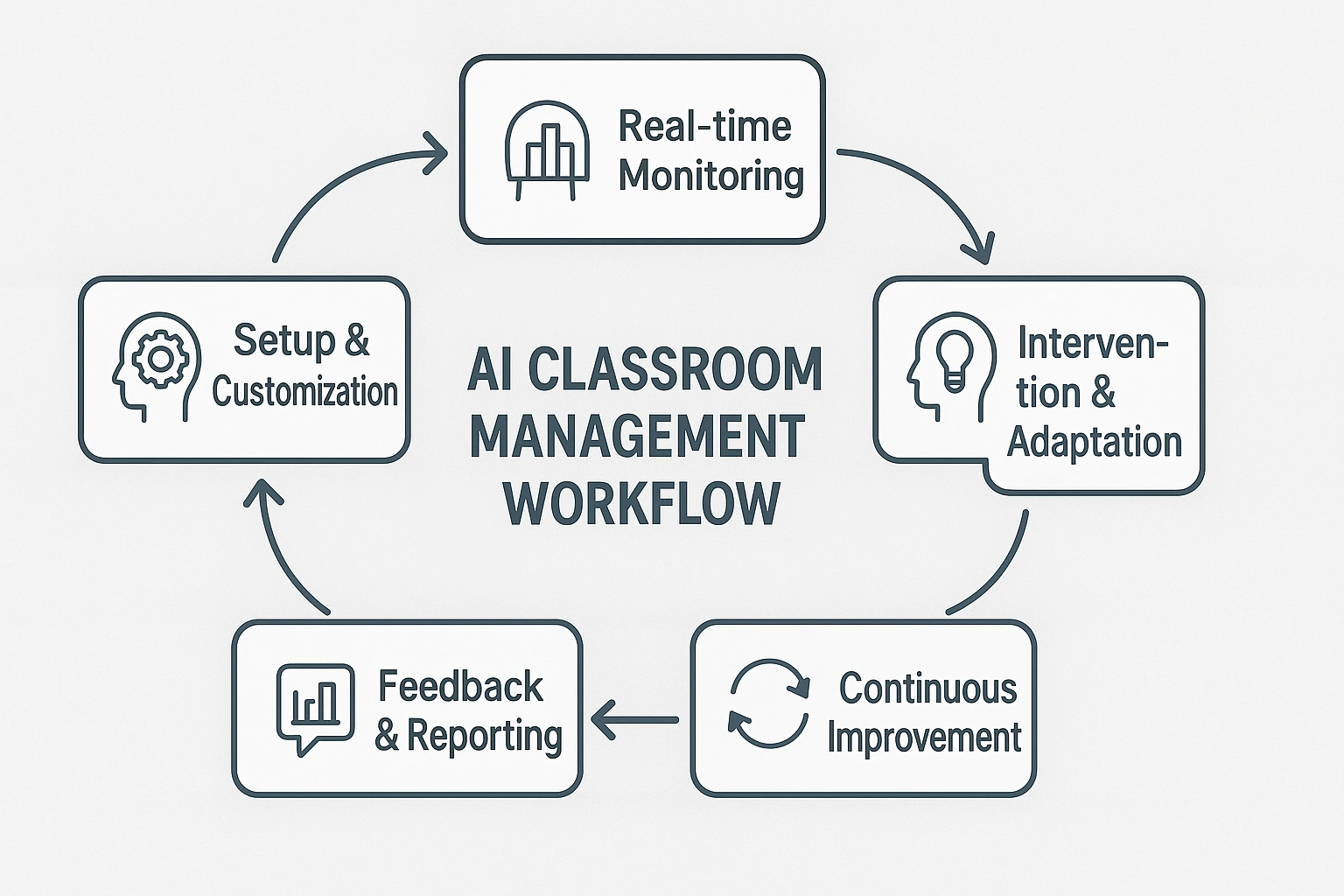
This systematic approach ensures that AI classroom management apps act as powerful, intelligent partners, automating routine tasks and providing insightful data, thereby enabling teachers to focus on building meaningful connections and inspiring their students.
Real-Life Use Case: AI in Mrs. Davis’s Diverse Elementary Classroom
Mrs. Davis teaches a bustling 3rd-grade class, a vibrant mix of eager learners, some with high energy, others needing extra support to stay focused. Historically, maintaining a productive learning environment required constant vigilance, often leaving her exhausted. In 2025, she adopted an AI classroom management app designed for elementary students.
During independent work time, the app monitors each student’s digital progress and engagement within their learning platform. For example, if a student like Leo, prone to getting distracted, spends too long on one question or switches tabs frequently, the AI sends a subtle, non-disruptive alert to Mrs. Davis’s tablet. She can then discreetly approach Leo, offer a gentle reminder, or provide a quick boost of encouragement.
For group activities, the app helps Mrs. Davis create balanced teams and gamifies tasks with points for collaboration. “The AI app is like a supportive assistant,” she says, “giving me a clear view of engagement while keeping students motivated. I can focus on teaching rather than managing, and tailor lessons using the app’s insights for maximum participation.”
Pros & Cons of Mrs. Davis’s Experience with AI Classroom Management
| Pros of AI Classroom Management Apps | Cons/Challenges |
|---|---|
| Enhanced Engagement: Gamification and personalization boost student motivation. | Requires careful setup to avoid overly prescriptive interventions. |
| Proactive Interventions: Alerts teachers to disengagement before it escalates. | Potential for privacy concerns if not implemented transparently. |
| Time Savings: Automates routine monitoring and data collection. | Initial learning curve for teachers to fully utilize features. |
| Data-Driven Insights: Provides analytics on student focus and participation. | Reliance on digital platforms may exclude students without access. |
| Supports Differentiation: Helps tailor activities and support for diverse learners. | Risk of over-monitoring if not balanced with trust and autonomy. |
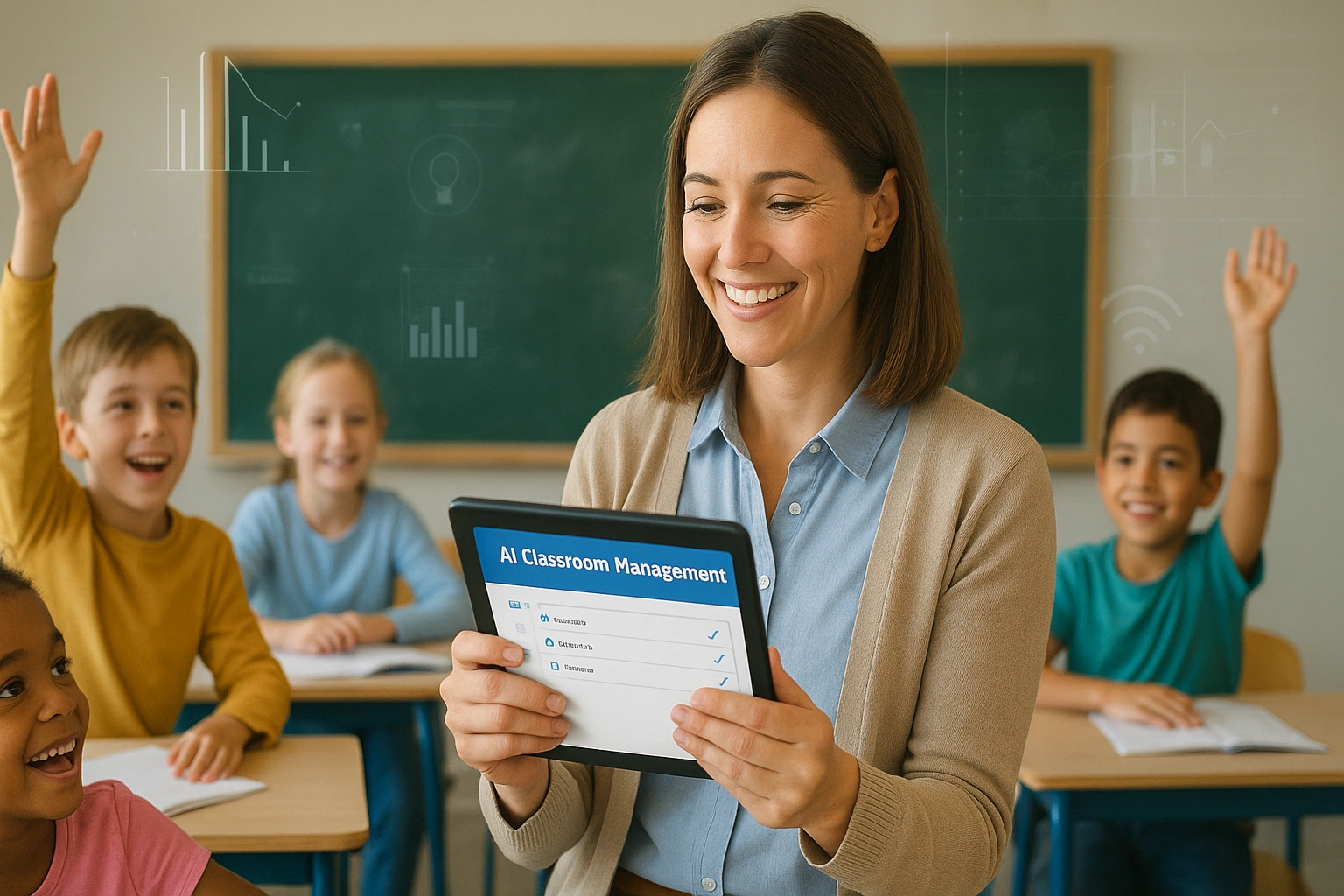
This example illustrates how AI classroom management apps can be a transformative force, enabling teachers to foster a more focused and engaging learning environment, ultimately benefiting student development and teacher well-being.
Top AI Classroom Management Apps & Student Engagement AI Apps in 2025: A Comparative Look
The landscape of AI classroom management apps and student engagement AI apps is diverse and rapidly innovating in 2025. Here’s a comparative overview of some popular hypothetical categories and examples, showcasing the leading edge of smart solutions for optimizing learning environments.
| App Category (Example) | Key Features | Pros | Cons | Best For |
|---|---|---|---|---|
| “FocusFlow AI” (Engagement & Attention Monitoring) | Tracks digital activity, identifies signs of disengagement, provides real-time alerts to teachers, offers personalized refocusing prompts. | Excellent for maintaining student focus in digital learning, proactive intervention, data-driven insights on attention. | Potential privacy concerns if not managed transparently, reliant on digital device usage, may feel intrusive to some. | Remote/hybrid learning, classes with heavy digital content. |
| “ClassHarmony” (Behavior & Rewards System) | Gamified reward systems, automated positive reinforcement, behavioral analytics, communication tools for parents. | Promotes positive behavior, motivates students through gamification, improves home-school communication. | Requires consistent teacher input for behavior tracking, over-reliance on external motivators, can be complex to customize. | Elementary & middle school classrooms, fostering positive class culture. |
| “InsightEd” (Adaptive Learning Environment) | Personalizes learning content and pace, provides diagnostic assessments, identifies learning gaps, recommends resources. | Maximizes individual student progress, highly differentiated instruction, reduces teacher burden in content tailoring. | Primarily focused on academic differentiation, less on behavior; requires strong content library, can be costly. | Teachers focused on individualized academic growth, mastery-based learning. |
| “GroupGenius” (Collaborative AI Assistant) | Intelligent group formation, monitors group dynamics, facilitates collaborative tasks, provides prompts for teamwork. | Optimizes group work, encourages equitable participation, saves time in team formation. | May not capture all social nuances, effectiveness depends on task design, requires clear student roles. | Project-based learning, fostering collaboration skills. |
| “Routinaid” (Automation & Administrative Helper) | Automated attendance, scheduling assistance, report generation, parent communication templates, resource organization. | Streamlines administrative tasks, frees up teacher time, ensures consistency in routine operations. | Less direct impact on real-time classroom behavior, primarily back-office support. | Teachers seeking to reduce administrative workload. |
Common Mistakes to Avoid When Implementing AI Classroom Management Apps
While AI classroom management apps offer transformative potential, their successful integration requires careful consideration to avoid common pitfalls. Being aware of these missteps will help you maximize the benefits of these student engagement AI apps and create a truly effective learning environment.
- Treating AI as a Babysitter: AI should support your management, not replace your presence or human connection. Over-reliance can lead to a less personal classroom environment and a decrease in your authority.
- Ignoring Privacy Concerns: Student data is paramount. Always thoroughly vet an app’s privacy policy and ensure it complies with educational data protection laws (e.g., FERPA, GDPR). Be transparent with students and parents about what data is collected and how it’s used.
- Lack of Transparency with Students and Parents: Failing to communicate how and why you’re using AI tools can lead to distrust and resistance. Explain the benefits to students (e.g., “This helps me ensure everyone gets the right support”) and keep parents informed.
- Over-Monitoring and Micro-Managing: While AI provides data, excessive monitoring can stifle student autonomy and create an atmosphere of surveillance. Balance data insights with trust and opportunities for independent learning.
- Failing to Personalize AI Settings: Generic AI settings won’t fit every classroom. Take the time to customize alerts, interventions, and reward systems to align with your specific class culture, student needs, and teaching style.
- Expecting Immediate Perfection: AI tools, especially those that learn, require time and iteration to become fully effective for your specific context. Start small, experiment, and be prepared to adjust your approach.
- Neglecting Professional Development: Like any new technology, effective use of AI classroom management apps requires ongoing learning. Stay updated through webinars, workshops, and community forums to harness their full capabilities.
Expert Tips & Best Practices for Maximizing AI Classroom Management
To truly transform your classroom with AI classroom management apps, a thoughtful and strategic approach is essential. These expert tips will help you integrate student engagement AI apps effectively, fostering an optimal learning environment.
- Integrate AI Thoughtfully, Not Forcefully: Identify specific pain points in your classroom management or areas where student engagement could improve, then seek AI solutions tailored to those needs. Don’t adopt AI just for the sake of it.
- Focus on Empowerment, Not Control: Position AI tools as aids for learning and engagement, not as surveillance or punitive measures. Emphasize how the AI helps *them* learn better and how it helps *you* provide better support.
- Leverage Data for Proactive Strategies: Use the insights provided by AI classroom management apps to understand patterns of engagement and behavior. This data can inform your instructional adjustments, group formations, and individual student support, allowing for proactive rather than reactive management.
- Prioritize Privacy and Ethical Use: Always choose apps from reputable developers with transparent privacy policies. Educate yourself, students, and parents on data handling practices. Use anonymized or aggregated data whenever possible.
- Combine AI with Human Touch: AI excels at routine monitoring and data analysis, but your emotional intelligence, empathy, and ability to build rapport are irreplaceable. Use the time saved by AI to deepen your connections with students and address complex social-emotional needs.
- Gamify Learning Experiences: Actively use the gamification features in student engagement AI apps. Design challenges, reward systems, and collaborative games that align with your curriculum, making learning more enjoyable and motivating.
- Facilitate Student Self-Regulation: Empower students to use AI tools for self-monitoring. For example, some apps might provide students with personalized dashboards showing their own engagement levels or progress, encouraging self-reflection and goal-setting.
- Stay Agile and Adapt: The digital classroom is dynamic. Continuously evaluate the effectiveness of your AI tools, solicit feedback from students, and be prepared to adjust settings and strategies as needed to optimize the learning environment.
- Seek Community and Share Best Practices: Connect with other educators using AI classroom management apps. Share your successful strategies, ask questions, and learn from their experiences to continuously improve your implementation.
“The future of classroom management isn’t about AI taking over, but about AI giving teachers superpowers. It frees us to be more present, more responsive, and more impactful in fostering truly engaged learners,” asserts Dr. Maya Singh, an educational innovation consultant. “It’s about humanizing education through intelligent technology.”
Frequently Asked Questions About AI Classroom Management Apps
Q: What are AI classroom management apps?
A: AI classroom management apps are intelligent tools that leverage artificial intelligence to assist teachers in organizing, monitoring, and optimizing the learning environment, ultimately boosting student engagement and improving behavior.
Q: How do AI apps improve student engagement?
A: Student engagement AI apps can personalize learning, provide instant feedback, gamify tasks, and offer insights into student focus levels, creating a more dynamic and responsive educational experience that keeps students interested and motivated.
Q: Are AI classroom management tools intrusive for students?
A: Reputable AI classroom management tools are designed to respect student privacy while providing beneficial insights. Teachers should choose platforms with transparent data policies and communicate their use to students and parents to build trust and ensure ethical implementation.
Q: Can AI replace the teacher’s role in classroom management?
A: No, AI tools are designed to support and enhance a teacher’s classroom management skills, not replace them. They automate routine tasks, provide data-driven insights, and offer new ways to engage students, allowing teachers to focus on building relationships and addressing individual needs.
Q: What types of data do AI classroom management apps collect?
A: Depending on the app, data collected might include participation rates, time spent on tasks, performance in activities, and behavioral patterns (e.g., via non-verbal cues in remote settings). Ethical apps focus on aggregated, anonymized data to inform instruction and engagement strategies.
Q: How do AI classroom management apps handle student privacy?
A: Handling student privacy is paramount for AI classroom management apps. Ethical tools implement robust data encryption, anonymization techniques, and strict access controls. They also adhere to educational privacy regulations like FERPA and GDPR. It’s crucial for schools and teachers to select compliant apps and clearly communicate their privacy practices to all stakeholders.
Conclusion: Embracing the Future of Assessment
The emergence of AI classroom management apps in 2025 marks a pivotal moment for education. By providing innovative student engagement AI apps and intelligent solutions, AI offers powerful support for creating dynamic, productive, and highly interactive learning environments. These tools not only empower teachers to minimize disruptions and streamline routines but also foster unprecedented levels of student motivation and participation, ultimately enriching the educational experience for everyone.
Embracing AI in classroom management helps teachers amplify the human side of teaching. By automating tasks and providing data insights, educators can focus on relationships, personalized support, and inspiring lifelong learning. Explore AI classroom management apps to transform your teaching. For more insights, visit AI in Finance, or learn about global AI trends in education via Statista or Google Scholar.