
Introduction
Every startup dreams of explosive growth, but the reality is often a struggle to keep up. Sales teams get bogged down in manual data entry and inconsistent follow-ups, while promising leads fall through the cracks. What if you could give your sales team a secret weapon—an AI CRM that prioritizes leads, automates outreach, and predicts success?
This AI CRM transforms the way teams handle prospects, turning chaotic sales processes into smooth, efficient workflows. In this AI CRM case study, we explore how a B2B startup overcame its growth ceiling by implementing an AI CRM to manage leads smarter, streamline communications, and increase conversions.
With the right AI CRM, your team can focus on meaningful conversations instead of tedious tasks, ensuring no lead is lost and every opportunity is maximized. This approach proves that AI CRM is not just a tool but a strategic advantage for modern sales teams looking to achieve remarkable growth.
The Subject of Our Case Study: “InnovateTech”
Our case study focuses on “InnovateTech,” a fictional but highly representative B2B SaaS startup. With a team of five sales reps, InnovateTech provides project management software for creative agencies. Despite having a great product and a steady stream of inbound leads, their sales process was chaotic. By implementing an AI CRM, they were able to organize their workflow, prioritize leads, and track opportunities more effectively. This AI CRM helped the team improve communication and automate follow-ups, turning scattered prospects into actionable leads. Their story illustrates how an AI CRM can transform daily operations and achieve meaningful results, making AI CRM an essential tool for modern B2B sales success.
The adoption of AI in the sales industry is a major trend. A recent report from Salesforce found that high-performing sales teams are significantly more likely to be using AI tools. InnovateTech’s journey from chaos to clarity is a practical demonstration of why this is the case.

The Challenge: A Leaky Sales Funnel
Before implementing an AI solution, InnovateTech’s sales process was plagued by inefficiencies that were costing them deals.
Inconsistent Lead Follow-Up
With hundreds of leads coming in each month, the sales team struggled to keep up. There was no standardized process for follow-up. Some leads were contacted immediately, while others languished in the inbox for days. This inconsistency was their biggest source of lost revenue.
No Method for Prioritizing Leads
The sales reps treated every lead the same, whether it was a Fortune 500 company or a student doing research. They had no way of knowing which leads were most likely to convert, so they wasted valuable time on low-potential prospects.
Time Wasted on Administrative Tasks
The reps were spending an estimated 10 hours per week on manual data entry—logging calls, updating contact records, and writing follow-up emails from scratch. This was time they could have been spending on actual conversations with potential customers. Understanding the financial impact of this lost time was a key motivator for change.
The Solution: Implementing an AI-Powered CRM
InnovateTech’s leadership knew they needed a centralized system that could not only store customer data but also make their team smarter and more efficient. They chose **HubSpot Sales Hub**, a platform known for its powerful yet user-friendly AI features.
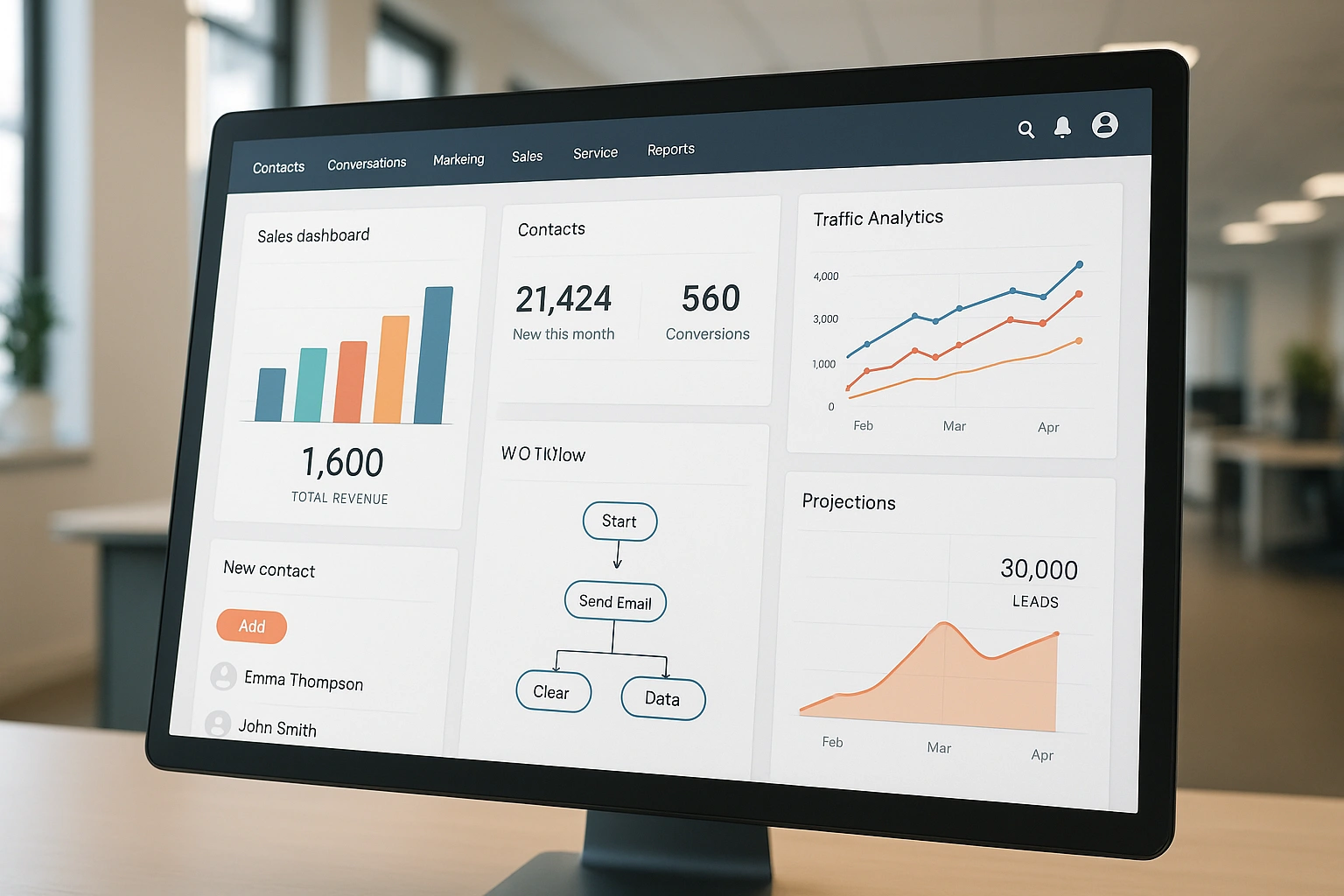
Here’s a breakdown of the key AI features they implemented:
| AI Feature | Problem Solved |
|---|---|
| Predictive Lead Scoring | The AI analyzed historical data to create a profile of their ideal customer. It then automatically scored all new leads, allowing the team to instantly identify the most promising prospects. |
| Automated Email Sequences | They built a series of personalized follow-up emails that were automatically sent to new leads over a period of two weeks, ensuring consistent and timely communication. |
| Conversation Intelligence | The AI transcribed and analyzed sales calls, providing insights into what top performers were doing differently and helping managers coach the rest of the team more effectively. |
The Implementation and Results
This is the core of our **AI CRM case study**: the measurable results. The implementation process was managed by the Head of Sales and took about two weeks, including data migration and team training.
The impact was felt almost immediately. The sales team started their day with a clear, prioritized list of leads. The automated email sequences handled the initial follow-up, freeing them to focus on conversations with engaged prospects. The insights from conversation intelligence led to a standardized, more effective sales script for the whole team.
| Metric | Result |
|---|---|
| Sales Revenue | Increased by 25% over the six-month period. |
| Lead-to-Close Rate | Improved by 15% due to better lead prioritization and follow-up. |
| Time Spent on Admin Tasks | Reduced by an average of 10 hours per sales rep per week. |
| Sales Cycle Length | Decreased by an average of 5 days. |
Key Takeaways for Your Business
InnovateTech’s story provides a clear blueprint for **AI customer management success**. Here’s a comparison of how their sales process was transformed.
| Sales Function | Before AI (The Manual Way) | After AI (The Automated Way) |
|---|---|---|
| Lead Prioritization | Reps treated all leads equally, based on gut feel. | AI automatically scored and prioritized leads based on their likelihood to close. |
| Follow-Up Process | Inconsistent, manual follow-up emails. Many leads were forgotten. | Every lead was entered into an automated, personalized email sequence. |
| Sales Coaching | Based on anecdotal evidence and manager ride-alongs. | Based on data-driven insights from AI-powered call analysis. |
Common Mistakes InnovateTech Avoided
Part of their success was avoiding the common pitfalls of implementing a new CRM. Here are the key mistakes they sidestepped.
- Lack of Team Buy-In: The sales team was involved in the selection process and received thorough training, so they saw the AI as a helpful tool, not a threat.
- “Garbage In, Garbage Out”: They took the time to clean and properly migrate their existing customer data into the new system.
- Not Defining Goals: They had clear, measurable goals from the start (e.g., “increase lead-to-close rate by 10%”).
- Forgetting to Customize: They customized the CRM’s deal stages and properties to match their specific sales process. As experts cited by Google often advise, customization is key to user adoption.
Expert Tips & Best Practices from the Case Study
You can replicate this success in your own business by following these best practices.
- Start with a Pilot: Roll out the new system with one or two of your most tech-savvy reps first. Let them become internal champions.
- Automate One Thing at a Time: Don’t try to automate your entire sales process on day one. Start with a simple workflow, like the lead follow-up sequence.
- Trust the AI’s Suggestions: Encourage your team to trust the AI’s lead scores and focus on the high-priority prospects first.
- Use the Data for Coaching: Make reviewing the insights from conversation intelligence a regular part of your one-on-one meetings with your sales reps.
“The AI CRM didn’t replace our salespeople; it made them better. It took the administrative burden off their shoulders and gave them the insights they needed to be strategic advisors, not just order takers,” says the fictional Head of Sales at InnovateTech.
Frequently Asked Questions (FAQ)
Q: What is an AI CRM?
A: An AI CRM (Customer Relationship Management) is a system that uses artificial intelligence to automate sales, marketing, and customer service tasks. It analyzes customer data to provide insights, score leads, personalize communications, and forecast sales, helping businesses build stronger relationships and close more deals.
Q: How did the AI CRM in this case study increase sales?
A: The AI CRM increased sales in two key ways. First, its predictive lead scoring allowed the sales team to focus their efforts on the most promising prospects. Second, the automated, personalized email follow-up sequences ensured that no lead was forgotten, nurturing them through the sales funnel until they were ready to buy.
Q: Was the AI difficult for the sales team to adopt?
A: No. The chosen platform, HubSpot, is known for its user-friendly interface. The AI features were designed to assist, not replace, the sales team. By automating tedious tasks like data entry and follow-ups, the AI allowed the reps to spend more time on what they do best: building relationships and selling.
Q: What was the return on investment (ROI) in this AI CRM case study?
A: The ROI was significant and rapid. The 25% increase in sales directly attributed to the AI-powered workflows far exceeded the monthly cost of the software. Additionally, the 10 hours saved per sales rep per week represented a massive productivity gain, allowing the team to handle more leads without increasing headcount.
Q: What is the best AI CRM for a startup?
A: For startups and small businesses, HubSpot is an excellent choice due to its powerful free CRM and scalable, user-friendly AI tools. Zoho CRM with its Zia AI is another strong, budget-friendly option. The best choice depends on your specific needs and budget.
Conclusion
The story of InnovateTech is a clear and compelling example of the power of modern sales technology. This **AI CRM case study** demonstrates that with the right tools and a strategic approach, any business can overcome the challenges of manual processes and achieve significant growth. By automating tasks, prioritizing efforts, and providing deep insights, an AI CRM is the key to unlocking a more efficient, effective, and successful sales organization.