
Introduction
The conversation around AI in education often sparks fear and speculation. Yet, beyond the headlines, classrooms worldwide are quietly changing. Educators, managing heavy workloads and diverse student needs, are finding that AI is not a threat but a helpful partner. These real-world AI success stories teachers show how technology can personalize learning, spark creativity, and save valuable time. By exploring AI success stories teachers are creating, we can see practical examples of how innovation is transforming education. This guide highlights inspiring AI success stories teachers are using to make a positive difference in their classrooms today.
What Are AI Success Stories in Education?
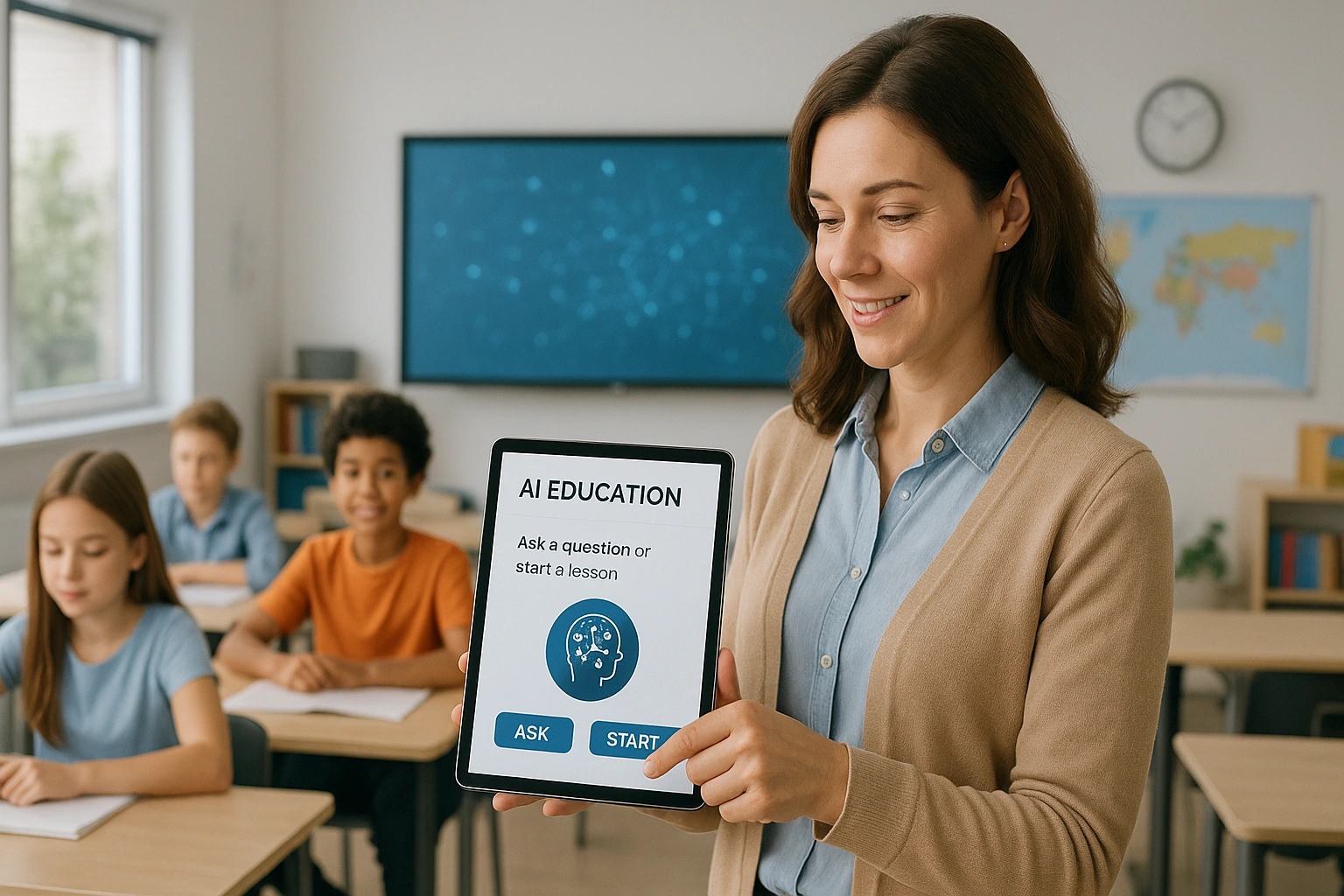
AI success stories teachers provide real-world examples where artificial intelligence tools have led to meaningful improvements in education. These AI success stories teachers are not about robots taking over classrooms; they focus on practical applications. From a high school English teacher using AI to give more detailed feedback, to a language teacher leveraging AI to increase practice time, these AI success stories teachers demonstrate tangible benefits. Even a history teacher can create engaging, interactive lesson plans in minutes instead of hours, highlighting how AI success stories teachers are transforming teaching and learning today.
These **AI education case studies** are critical because they provide a much-needed counter-narrative to the fear of AI. The global AI in education market is growing at a phenomenal rate, expected to reach nearly $20 billion by 2027. This growth is not happening in a vacuum; it’s driven by educators who are finding innovative ways to use these tools to solve long-standing challenges in the classroom.
Why These Stories Matter for the Future of Education
Sharing AI success stories teachers is about more than celebrating new technology; these AI success stories teachers show better ways to teach and learn. By highlighting AI success stories teachers, educators can see practical examples of effective strategies. These AI success stories teachers inspire others to adopt innovative approaches in the classroom. Ultimately, following AI success stories teachers helps improve learning outcomes while supporting teachers in their daily work.
Personalizing Learning for Every Student
One of the biggest challenges in teaching is managing diverse learning speeds and styles, and AI success stories teachers show how this can be addressed. Many AI success stories teachers highlight how AI tools provide struggling students with extra support while giving advanced students a greater challenge. By looking at AI success stories teachers, educators can see practical ways to differentiate instruction effectively. Following AI success stories teachers helps create a more personalized learning experience for every student in the classroom.
Saving Teachers from Burnout
Teacher burnout is a critical issue, largely driven by overwhelming administrative tasks. AI can automate the most time-consuming parts of the job, giving teachers their time back to focus on what they do best: teaching.
- Automate the grading of quizzes and assignments.
- Generate lesson plans, worksheets, and presentations in minutes.
- Create personalized feedback for student writing.
Boosting Student Engagement and Agency
AI tools can make learning more interactive, gamified, and relevant to students’ interests. An AI tutor can provide a safe, non-judgmental space for a student to ask questions and practice new skills, giving them more control over their own learning journey. For more on how technology is shaping our world, see this article on digital finance trends.
How It Works: The Anatomy of an AI Success Story
Every AI success story in the classroom follows a similar pattern: a dedicated teacher identifies a specific challenge and strategically applies an AI tool to solve it.

Here’s a breakdown of the typical framework:
| Component | Description | Real-World Example |
|---|---|---|
| The Challenge | A common, persistent problem in the classroom. | Students are disengaged during history lectures. |
| The AI Tool | A specific, user-friendly AI application. | The teacher uses Curipod to create an interactive lesson with polls and word clouds. |
| The Outcome | A measurable improvement in learning or efficiency. | Student participation increases by 50%, and the teacher saves an hour on lesson prep. |
Real-Life Success Story: A Review of Khanmigo in a Math Class
To get a firsthand look at one of these **AI success stories, teachers** were surveyed about their use of **Khanmigo**, the AI tutor from Khan Academy. One middle school math teacher, “Mrs. Davis,” shared her experience.
Her challenge was classic: a classroom of 30 students with wildly different skill levels in algebra. While some students were ready to move on, others were still struggling with foundational concepts. Mrs. Davis used Khanmigo as a personalized teaching assistant. During independent practice time, students could “ask Khanmigo” for a hint. The AI wouldn’t give the answer but would ask guiding, Socratic questions to help the student figure out the next step on their own. This allowed Mrs. Davis to focus her time on small group instruction, confident that every student was getting the one-on-one support they needed.
| Pros | Cons |
|---|---|
| ✅ Truly Personalized Support: Every student gets a private tutor that adapts to their level. | ❌ Requires School Buy-In: It is a paid tool that typically requires a school or district-level subscription. |
| ✅ Promotes Critical Thinking: The Socratic method teaches students how to solve problems, not just find answers. | ❌ Limited to On-Platform Content: It can only help with exercises within the Khan Academy ecosystem. |
| ✅ Frees Up Teacher Time: Allows the teacher to focus on higher-level instruction and small groups. | ❌ Requires Good Digital Infrastructure: Every student needs access to a device and reliable internet. |
Comparing the AI Tools Behind the Success Stories
Different tools are creating different types of success stories. Here’s how some of the most popular AI tools for teachers compare.
| Tool | Key AI Feature | Success Story Use Case | Best For |
|---|---|---|---|
| Khanmigo | AI-powered Socratic tutoring. | Providing personalized math help to students at their own pace. | Differentiated instruction in STEM subjects. |
| QuillBot | AI paraphraser and grammar checker. | Helping high school students improve their writing clarity and sentence structure. | Improving student writing skills. |
| Curipod | AI lesson plan and interactive slide generator. | Turning a standard history lecture into an engaging, interactive experience. | Quickly creating engaging and interactive lessons. |
| Duolingo for Schools | Gamified, adaptive language learning curriculum. | Providing a fun, effective way for students to practice vocabulary outside of class. | Supplementing language instruction. |
Common Mistakes to Avoid When Implementing AI
To create your own success story, it’s important to avoid these common pitfalls.
- Choosing a Tool Before Identifying a Problem: Don’t adopt AI for the sake of it. Start with a specific challenge you’re facing and find a tool that solves it.
- Ignoring Ethical Considerations: Have an open conversation with your students about academic integrity and the ethical way to use AI as a learning aid, not a cheating tool.
- Not Providing Scaffolding: Don’t just tell students to use a new tool. Model how to use it effectively and provide clear guidelines and examples.
- Forgetting About Equity: Ensure that any tool you use is accessible to all your students, regardless of their access to technology at home.
- Over-Relying on AI: The goal of AI is to augment, not replace, great teaching. As experts cited by Google often emphasize, the human connection is still the most important part of education.
Expert Tips for Success
Ready to create your own **AI success stories? Teachers** who are leading the way recommend these best practices.
- Start Small and Specific: Pick one task—like creating an exit ticket—and find an AI tool to help.
- Use AI as a Creative Brainstorming Partner: Ask it for five different ways to introduce a new topic or three creative project ideas.
- Collaborate with Colleagues: Share what’s working with other teachers in your school and learn from their experiences.
- Focus on Process, Not Just the Product: Grade students on their drafts, their use of feedback, and their reflections on the learning process.
“The best AI implementations in the classroom are the ones where the technology becomes invisible, and all you see is a more engaged, curious, and confident student.”
– An EdTech Integration Specialist
Frequently Asked Questions (FAQ)
Q: Will AI replace teachers?
A: No. The consensus among educators is that AI is a powerful tool to assist teachers, not replace them. AI can automate administrative tasks and provide personalized instruction, which frees up teachers to focus on the uniquely human aspects of teaching: mentorship, emotional support, and fostering critical thinking.
Q: What are the best free AI tools for teachers?
A: Many excellent AI tools offer free tiers for educators. Khanmigo (from Khan Academy) offers some free access, Curipod is great for creating interactive lessons, and the basic versions of Grammarly and QuillBot are invaluable for teaching writing. Duolingo for Schools is also completely free for language teachers.
Q: How can teachers prevent students from cheating with AI?
A: The key is to shift the focus from the final product to the learning process. Design assignments that require critical thinking, personal reflection, and in-class discussion. Teach students how to use AI ethically as a research assistant or brainstorming partner, not as a tool to write their essays for them.
Q: What is an ‘AI education case study’?
A: An AI education case study is a detailed examination of how a specific AI tool was implemented in a real classroom to solve a particular problem. It typically includes the initial challenge, the process of using the tool, and the measurable outcomes, such as improved test scores or higher student engagement.
Q: Is it difficult to start using AI in the classroom?
A: Not at all. The best approach is to start small. Pick one time-consuming task, like creating a quiz or a lesson plan, and find a user-friendly AI tool to help with it. Many modern educational AI tools are designed to be intuitive for teachers with no technical background.
Conclusion
The narrative of AI in education is not about replacing teachers but empowering them, as shown by numerous AI success stories teachers around the world. These AI success stories teachers highlight how educators are using technology to create more personalized, engaging, and effective learning experiences. By looking at AI success stories teachers, it’s clear that automating routine tasks allows teachers to focus on inspiring students. Ultimately, AI success stories teachers demonstrate a powerful partnership between human educators and AI tools, shaping the future of education.